

A bend ordered as simply “90 degrees” can arrive with the wrong orientation, radius, rail profile or splice-hole pattern, forcing site modifications and disrupting cable clearance. By the end, you will have a measurement checklist, a supplier-comparison method and an RFQ format for sourcing compatible ladder-system fittings.
Key takeaways
- Measure tray width, side-rail height, profile and splice-hole pattern first.
- Confirm bend radius against cable diameter and minimum manufacturer bend radius.
- Use factory-made fittings when fit, finish and installation time matter.
- List dimensions, material, finish, quantity and delivery location in your RFQ.
Measure the Route Before You Specify the Bend
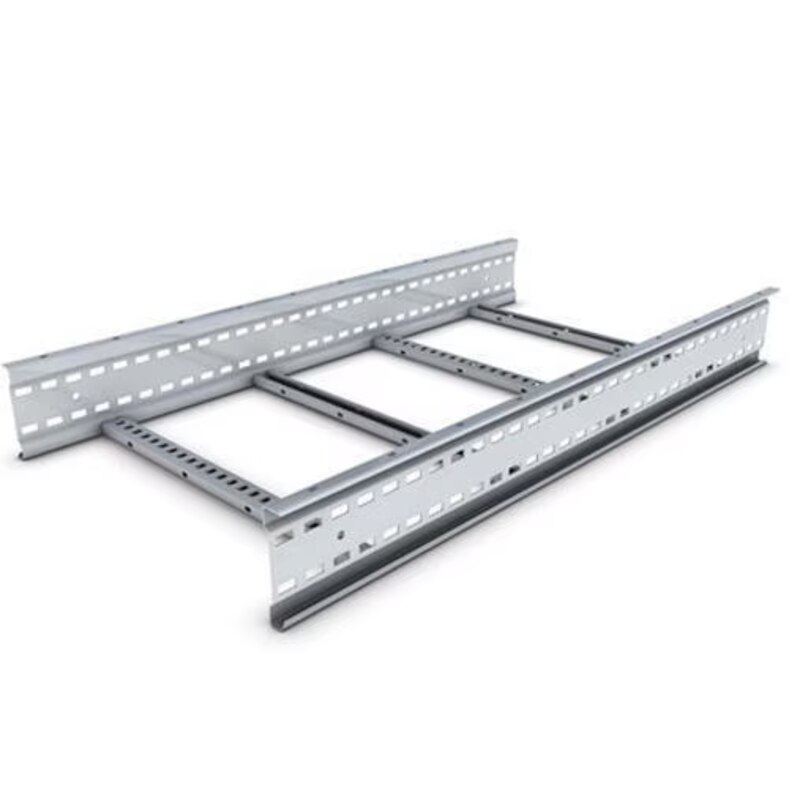
Collect the route dimensions and cable data before you order a cable tray bend. A “90-degree bend” is incomplete: the fitting must match the ladder tray’s width, side-rail height, rail profile, rung spacing, material thickness, splice-hole pattern and connection method.
1. Measure the existing tray width and side-rail height. Photograph the rail profile, rungs, splice plates and hole pattern so the new fitting aligns with straight sections.
2. Mark the bend direction and angle: horizontal 45-degree or 90-degree, vertical inside or outside, tee, cross, reducer or offset. Record the start and end elevations, plus the straight tangent length available before and after the bend.
3. Identify every cable entering the fitting. Ask each cable manufacturer for its minimum permissible bending radius; use the largest required radius, not a generic standard. Power cables can be stiff, while fibre-optic cables can impose a different limit.
4. Measure the proposed inside bend radius against that controlling cable, then record the support locations and span around the fitting. Capacity depends on the support arrangement, loading pattern, splice positions and permitted deflection, not steel thickness alone.
5. Request a dimensioned fabrication drawing before placing a bulk order. Check its overall width, rail height, inside radius, angle, tangent lengths, splice-hole locations and material thickness against your measurements.
A wrong elevation or hole pattern can force field cutting, drilling or realignment. Include the tray system, connection method and installation environment in the order, rather than leaving the manufacturer to interpret a sketch.
Choose the Bend Geometry and Check Cable Clearance
Select the fitting by route direction first, then size its inside radius from the cable manufacturer’s minimum permissible bending radius. The controlling cable is the largest or stiffest in the bundle; a power cable can need far more room than control cable, while fibre-optic cable can impose its own limit.
| Fitting type | Route change | Clearance check |
|---|---|---|
| Horizontal 45-degree bend | Sweeping plan turn | Confirm the cable bundle follows the radius without rail contact |
| Horizontal 90-degree bend | Right-angle plan turn | Check the outer cable path and separation at the elbow |
| Vertical inside bend | Route rises through the inside curve | Check the lower cable’s bending radius |
| Vertical outside bend | Route rises around the outside curve | Check the upper cable’s support and pull path |
| Tee or cross | Main route branches | Check bend radius at every branch entry |
| Reducer or offset | Width or alignment changes | Confirm cables do not pinch at the transition |
A purchase description that says “90-degree bend” is incomplete. State horizontal, vertical inside or vertical outside, plus the angle and inside radius; then verify the cable maker’s measurement convention.
Before approving a ladder cable tray bend, compare it with the straight sections:
- Tray width and side-rail height
- Rail profile, rung spacing and material thickness
- Splice-hole pattern and connection method
- Dimensioned drawing showing angle, tangent lengths and inside radius
Do not treat this fitting as a solid-bottom tray elbow. Ask for load-test data or an engineering check covering the support span, splice locations, loading pattern and permitted deflection; steel thickness alone cannot prove safe capacity.
Compare Factory-Made Fittings with Site Fabrication
A manufactured bend is the better choice when the route is repeated, the installation is safety-critical, or the fitting must align exactly with existing ladder sections. It arrives with controlled geometry, consistent holes and a finish that does not depend on a site welder’s technique.
| Option | Advantages | Main risk or limitation |
|---|---|---|
| Factory-made bend | Matches the specified rail profile, width, height, rung spacing, splice-hole pattern and connection method; supports repeatable installation | Requires lead time and a confirmed drawing before production |
| Site-fabricated bend | Handles a one-off obstruction or late route change without waiting for a new fitting | Cutting and welding can distort the radius, misalign splice holes, damage corrosion protection and create sharp edges |
| Factory-made bend with system accessories | Provides compatible splice plates, bolts, bonding jumpers and supports as a coordinated set | A low item price is misleading if required hardware is excluded |
Do not infer load capacity from steel thickness. Ask for load-test data or an engineering check covering the bend geometry, support span, support arrangement, splice locations, loading pattern and permitted deflection.
Site fabrication makes sense only when a qualified fabricator can reproduce the required inside radius and connection details, then inspect and protect the altered steel. A welded repair to galvanized tray also needs suitable corrosion treatment; otherwise the cut edge becomes the first failure point.
For either choice, price ladder tray accessories as separate line items. Missing hold-down clamps, support brackets, reducers, tees or bonding jumpers can erase the apparent saving before installation ends.
Match the Finish to the Installation Environment
Specify the material and coating for the atmosphere the cable tray bend will face, not for the building name alone. Moisture, salt, chemical vapour, temperature and damaged coating determine whether the fitting survives.
| Environment | Material | Protection process | Specify or avoid |
|---|---|---|---|
| Dry indoor plant rooms | Carbon steel | Factory powder coating or electro-galvanizing | Use only where condensation and chemical exposure are controlled |
| Outdoor, damp or industrial areas | Carbon steel | Hot-dip galvanizing after fabrication | Require coverage inside rails, around welds and on drilled edges |
| Coastal or chloride-exposed locations | Stainless steel, usually 316 | Pickling and passivation after fabrication | Select 316 when salt spray or chloride cleaners are present; avoid relying on paint over ordinary steel |
| Chemically aggressive or hygiene-controlled areas | Stainless steel | Passivation matched to the service environment | Confirm chemical compatibility with the site’s cleaning agents |
Hot-dip galvanizing after fabrication protects the cable tray bend’s welds, holes and cut edges; pre-galvanized material leaves those areas exposed unless they receive a documented zinc repair. A painted finish is a finish, not a substitute for corrosion-resistant base metal in standing water or salt air.
Ask the supplier to state the base material, coating process, coating standard or specified thickness, surface preparation and repair method on the quotation. Check that splice plates, fasteners and the straight ladder sections use compatible materials; stainless steel joined directly to galvanized steel can create galvanic corrosion in a wet electrolyte.
Specify the same finish for every fitting in the route, or the least-protected bend can become the failure point.
Evaluate the Supplier and Write a Complete RFQ
Choose a cable tray bend manufacturer for ladder systems in Greater Noida by checking repeatable engineering evidence, not a catalogue or GST invoice. Ask each bidder for a dimensioned fabrication drawing and a first-off sample before approving a bulk order.
Your RFQ should request:
- Tray width, side-rail height, material thickness, bend angle, inside radius, tangent lengths, rail profile, rung spacing, splice-hole locations and connection method.
- Material grade, finish, coating thickness, applicable project requirement, and compliance with IEC 61537, NEMA VE 1 or the named Indian specification.
- Load-test data or engineering verification for your support span, support arrangement, splice locations, loading pattern and permitted deflection.
- Separate prices for splice plates, splice bolts, bonding jumpers, support brackets, hold-down clamps, covers, reducers, tees, crosses, risers and end caps.
- Drawing approval, first-off inspection, dimensional tolerances, material certificates, delivery date, packing method and replacement terms for nonconforming parts.
| Check | Strong quotation | Weak quotation |
|---|---|---|
| Manufacturer evidence | Welding, drilling, galvanizing, inspection and traceability records | Catalogue, GST invoice or trading declaration only |
| Radius and load | Cable-specific radius and documented system verification | “Standard bend” and thickness-based capacity claim |
| Accessories | Every ladder tray accessories item priced separately | One unexplained accessories allowance |
Compare a cable tray manufacturer in Greater Noida on identical quantities and specifications. Use the same RFQ with S.V. Metals & Extrusions Pvt. Ltd. and competing bidders; reject the lowest price if it omits hardware, testing or the approved drawing.
Related products
 | Cable Trays & Accessories Finish : Hot Dip Galvanized, Electro Plating, Natural MOC : MS, GI, SS304, SS316 View product → |
 | Cable Trays & Accessories Ladder Type Cable Trays are ideal for heavy duty power distribution in industrial facilities as it provides maximum ventilation and load carrying... View product → |
Frequently asked questions
What measurements do you need before ordering a ladder cable tray bend?
Provide the tray width, side-rail height, rail profile, rung spacing, material thickness, splice-hole pattern and connection method. Include the route angle and cable details.
How do you choose the correct cable tray bend geometry?
Select the angle and bend radius from the route layout, then check that the radius meets the cables’ minimum bending requirements and preserves clearance at the side rails.
When should you choose a factory-made cable tray bend instead of site fabrication?
Choose a factory-made bend when you need consistent geometry, matching connection holes, a controlled finish and faster installation. Site fabrication suits verified field adjustments but adds cutting, drilling and coating work.
What should a cable tray bend RFQ include?
State the tray series, width, side-rail height, profile, angle, radius, material, thickness, finish, splice details, quantity, drawings, delivery location and required documents.
Related products
 | MS Painted Ladder Type Cable Trays ₹100 Our company is engaged in offering robust built Ladder Type Cable Trays that are made from the finest mild steel. View product → |
 | MS Painted Ladder Type Cable Trays ₹115 We are offering MS Painted Ladder Type Cable Trays that are chiefly used for distribution of power and communication cables. View product → |
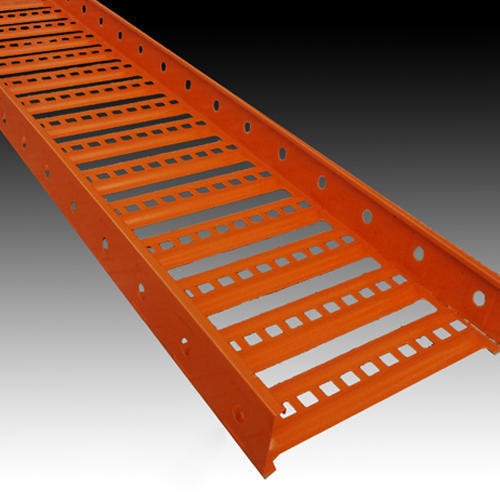 | Powder Coated Ladder Type Cable Trays 99 We are known for designing Powder Coated Ladder Type Cable Trays that are widely installed in industries, malls, railway stations, airports, office... View product → |
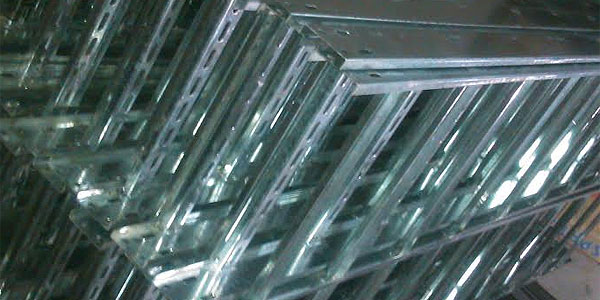 | Hot Dip Galvanized Ladder Type Cable Trays 113 Our company manufactures the finest range of Hot Dip Galvanized Ladder Type Cable Trays that is suited for heavy weight cables. View product → |