

Choosing a tray by steel thickness or a “heavy duty” label alone can leave an industrial route under-supported, overcrowded or difficult to maintain. By the end, you will be able to define the tray system, calculate usable capacity, coordinate supports and fittings, and compare a manufacturer’s documents with the installed route.
Key takeaways
- Base tray width on cable diameters, bending radii and planned spare capacity.
- Calculate fill from actual cable outside diameters, not nominal cable sizes.
- Match tray load ratings to support spacing, span length and installation conditions.
- Compare steel grade, finish, testing records, delivery control and fabrication quality.
How to specify the tray before requesting quotations
Choose tray dimensions from the route schedule, not from a supplier’s standard width. List each cable type, actual outside diameter, weight, minimum bending radius, separation requirement and planned addition.
Arrange the cables, then add clearance for cleats, pulling access and future capacity to determine inside usable width; do not fill the tray to its physical edges.
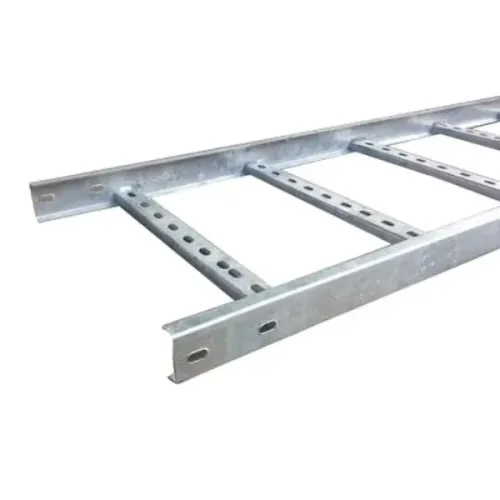
Set side-rail height and rung spacing against cable diameter, cleat arrangement and support span. A large cable bundle or vertical run may need taller rails and closer rungs to prevent sagging, movement or cable contact. Define straight lengths, bends, tees, reducers, covers, hold-down clamps, splice hardware and support accessories in the bill of quantities.
Specify steel grade, thickness and corrosion protection separately. Thicker unidentified steel is not automatically stronger than thinner, verified steel. Treat “heavy duty ladder cable tray” as a market description, not a capacity class.
- Request design load, support span, allowable deflection, safety factor, test method and the load-versus-span result for the complete system, including fittings and splice plates.
- Name IEC 61537 or NEMA VE 1, state the applicable edition, and identify which requirements govern loading, fittings, deflection and electrical continuity.
- For a ladder cable tray for building projects, coordinate the quoted tray geometry with the approved support arrangement rather than rating the straight section alone.
| Route environment | Finish direction | Specify |
|---|---|---|
| Indoor dry room | Suitable prefinished steel | Coating system and repair method |
| Semi-exposed service area | Corrosion protection matched to moisture | Exposure and maintenance requirement |
| Outdoor or chemically contaminated route | Environment-specific galvanizing or coating | Chemical exposure, coating requirement and damaged-edge repair method |
How to calculate cable fill and plan the route
Calculate usable tray capacity from the actual cable arrangement, not from tray width alone. Measure every cable’s outside diameter, weight and minimum bending radius, then preserve space for separation, cleats, pulling, inspection and future additions.
1. Group cables according to the electrical design: power, control, instrumentation and communication. Do not calculate capacity by adding diameters alone. Tight grouping can restrict ventilation and invalidate ampacity assumptions even when the cables appear to fit.
2. Draw the proposed route before ordering a ladder cable tray for building projects. Show straight sections, horizontal and vertical bends, tees, crosses, reducers and elevation changes. Check each fitting’s inside radius and usable width; a fitting with the nominal tray width can still crowd the bundle.
3. Reserve clearance at every turn for the cable manufacturer’s minimum bending radius, and provide cleat width, group spacing and pulling access. Add spare capacity for future cables. Use reducers where cable quantity changes, but avoid abrupt transitions that push cables against a side rail.
4. Mark pulling and inspection access points on the drawing. Long straight runs need access for installation and replacement, while vertical changes need cleats or hold-down arrangements that prevent cable weight from loading a bend.
5. Add covers only where falling objects, dust or rodents require protection. An open ladder tray improves ventilation and access, but it does not provide enclosed-system protection. Confirm the complete bill of quantities, including fittings, covers, clamps and splice hardware, before release.
How to match load ratings with supports and spans
Prove the route, not just the tray. Convert the cable schedule into a uniformly distributed load in kg/m or kN/m, then check concentrated loads from large cables, cleats and equipment entries separately. Add pulling forces, vibration and seismic effects; static cable weight misses dynamic loading during installation and operation.
| Load case | What to check | Typical consequence |
|---|---|---|
| Uniform cable load | Schedule weight over each supported span | Excessive sag between supports |
| Concentrated load | Large cables, cleats and equipment entries | Local rail or rung failure |
| Dynamic load | Pulling tension, vibration and seismic movement | Fastener, splice or anchor failure |
Do not accept “heavy duty ladder cable tray” as a capacity rating. Request load-versus-span data for the exact width, side-rail geometry, rung spacing, steel thickness, splice design and fittings. Confirm allowable deflection, test method, safety factor and the edition of IEC 61537 or NEMA VE 1 used.
Design trapeze supports, cantilever brackets and hanger rods with the tray. Check ceiling or roof structure, fire-rated penetrations, vibration and seismic requirements, then verify spacing at straight runs, bends, tees, reducers and splice locations. Straight-run spacing does not automatically apply at fittings.
Keep splice plates off unsupported overhangs unless the tested arrangement permits it, and calculate the maximum cantilever. A stronger tray cannot rescue an undersized bracket or anchor.
Show these items on the final drawing:
- Support type and spacing
- Anchor capacity and tray elevation
- Joint locations relative to supports
- Maximum permitted overhang and fitting-specific support points
What to control during installation and inspection
Treat the route as an assembled electrical system, not a row of straight tray. For a ladder cable tray for building projects, installation quality depends on joint geometry, edge condition, support, cable restraint and continuity testing.
1. Assemble straight sections and fittings with the specified bolted splice plates, washers and fastener torque. Align hole patterns before tightening; forced joints, protruding bolts and misaligned bends reduce usable width and create abrasion points.
2. Remove burrs and sharp edges after cutting. Treat cut ends, weld areas and damaged galvanizing or paint with the specified repair system before cables enter the route.
3. Bond every mechanical joint when the tray provides a protective bonding or equipotential path. Paint, galvanizing buildup, loose hardware and dissimilar metals can increase joint impedance, so test continuity after installation and record each result.
4. Install cable cleats at spacing suited to cable weight, short-circuit forces and vertical runs. Fit covers, hold-down clamps and entry guards where falling objects, dust, rodents or cable movement create a risk.
5. Maintain the cable manufacturer’s stated bending radius through every bend and elevation change. Leave access for pulling, inspection, replacement and thermal movement; do not fill the route so tightly that work requires cable removal.
6. Before energisation, inspect splice alignment, support spacing, edge condition, earthing jumpers, cable separation and unused capacity. Record deviations on the as-built drawing, including route changes and omitted fittings, instead of relying on photographs alone.
How to compare a Greater Noida manufacturer beyond price per metre
Price per metre is only a starting figure. Compare the delivered cost of one complete installed route, including fittings, hardware, protection, transport, site cutting and damaged-piece replacement.
Before placing a bulk order, ask the ladder cable tray manufacturer for industrial building projects in Greater Noida for:
- Approved shop drawings showing straight lengths, inside usable width, side-rail height, rung spacing, bends, tees, crosses, reducers, covers, hold-down clamps, splice hardware and support accessories.
- A complete bill of quantities and a traceable packing list for every dispatch.
- Material certificates, dimensional inspection records, coating records, weld-quality requirements and the tested load-versus-span result for the proposed system.
- The galvanizing or prefinished protection standard, coating requirement, damaged-edge repair method and fabrication sequence.
Compare offers on the same installed-route basis:
| Comparison point | Low straight-tray quote | Controlled project offer |
|---|---|---|
| Complete route | Omits nonstandard fittings or covers | Includes every listed component |
| Protection | Separate or unclear coating charges | Standard, coating thickness and repair method stated |
| Delivery | One lead time for all items | Straight sections and custom fittings scheduled separately |
| Performance | Straight-section rating only | Load-versus-span data for the complete system |
A ladder cable tray supplier in Greater Noida should identify custom-fitting lead times because a late route change can trigger another fabrication cycle. Local supply can shorten replacement time, but it does not prove compliance.
Evaluate S.V. Metals & Extrusions Pvt. Ltd. by the same evidence: repeatable fitting geometry, splice alignment, documented materials, coating control, load data and dispatch traceability. Choose the industrial cable tray manufacturer whose complete system matches the approved route.
Related products
 | Cable Trays & Accessories Ladder Type Cable Trays are ideal for heavy duty power distribution in industrial facilities as it provides maximum ventilation and load carrying... View product → |
 | MS Painted Ladder Type Cable Trays ₹100 Our company is engaged in offering robust built Ladder Type Cable Trays that are made from the finest mild steel. View product → |
Frequently asked questions
How should you specify a ladder cable tray before requesting quotations?
Provide the route schedule with each cable’s outside diameter, weight, minimum bending radius, separation requirement, planned additions, tray width, side-rail height, material, finish, cover needs and support spacing.
How do you calculate cable fill and plan the tray route?
Add the cross-sectional areas of the cables, compare the total with the tray’s usable internal area, reserve space for future cables and check bend radii, crossings, access and separation requirements along the route.
How do you match ladder tray load ratings with supports and spans?
Use the combined cable weight, tray weight and design allowance to select a load rating, then verify that rating at the specified support span rather than relying on the maximum rating alone.
What should you control during ladder cable tray installation and inspection?
Check alignment, level, joint tightness, support spacing, edge protection, bonding continuity, galvanised or painted finish, cable separation, bend support and damage repairs before cable pulling.
How can you compare a Greater Noida ladder cable tray manufacturer beyond price per metre?
Compare steel thickness and grade, load tables, finish quality, dimensional consistency, joint and support accessories, inspection documents, fabrication capacity, delivery reliability and the cost of site modifications.
Related products
 | MS Painted Ladder Type Cable Trays ₹115 We are offering MS Painted Ladder Type Cable Trays that are chiefly used for distribution of power and communication cables. View product → |
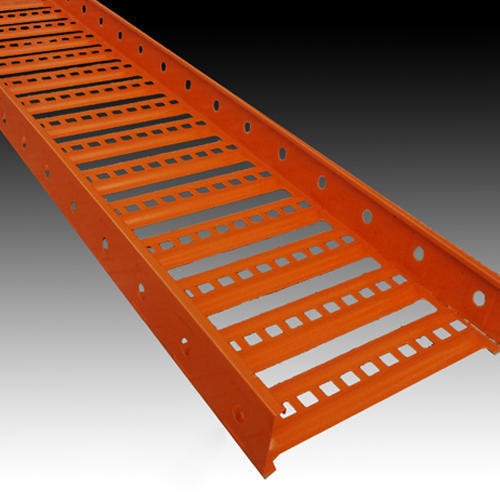 | Powder Coated Ladder Type Cable Trays 99 We are known for designing Powder Coated Ladder Type Cable Trays that are widely installed in industries, malls, railway stations, airports, office... View product → |
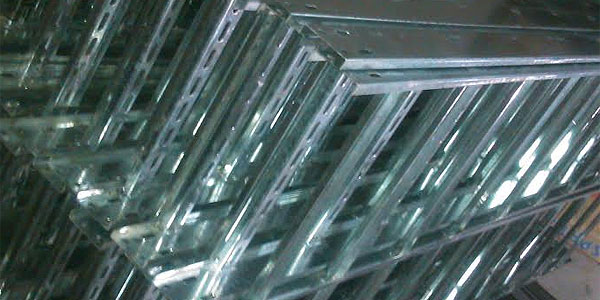 | Hot Dip Galvanized Ladder Type Cable Trays 113 Our company manufactures the finest range of Hot Dip Galvanized Ladder Type Cable Trays that is suited for heavy weight cables. View product → |
 | Pre Galvanized Ladder Type Cable Trays Features: 1)High weight bearing capacity 2)Used for reaching higher altitudes 3)Longer functional life 4)Excellent chemical resistance View product → |