

Rain, humidity, dust, salt, ultraviolet light and temperature movement can turn an apparently suitable open tray into a corrosion, loading or cable-protection problem. By defining the exposure, selecting the right material and finish, and checking drainage, supports, expansion and cable accessories, you can decide where a mesh tray belongs and what the installation must include.
Key takeaways
- Use open mesh outdoors only where water, debris and UV exposure are controlled.
- Match steel grade and coating to humidity, chemicals, salt and wash-down conditions.
- Design drainage, cable loading, bonding and mechanical protection as one system.
- Ask manufacturers for coating details, load data, tolerances and weather-use guidance.
Match the tray to the site’s weather exposure
An open mesh tray suits outdoor use when the route is sheltered from driving rain, hose-down water, falling debris and direct ultraviolet exposure, with no requirement to maintain an IP-rated enclosure.
Roofed service corridors, ventilated plant rooms and protected canopies can fit this condition if water can drain freely and the supports are designed for the site wind.
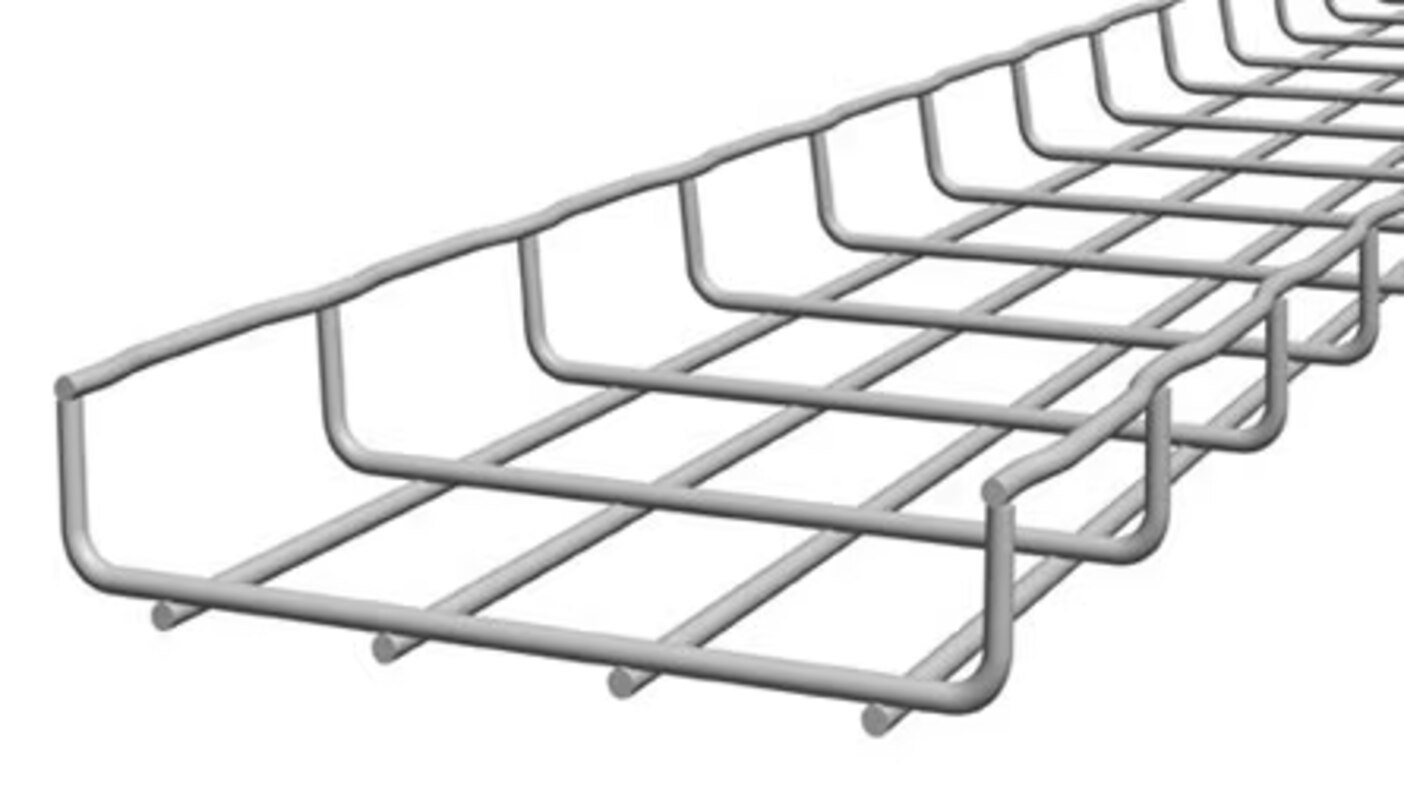
For wire mesh basket tray outdoor use, require greater protection when any of these conditions apply:
- Rain can enter from the side, flood the route or collect at low points.
- Dust, sand, leaves, bird nesting material or construction debris could block drainage or abrade cables.
- The route crosses a roof, open yard, coastal area or chemically polluted zone.
- Cables, glands or accessories need protection against dust, hose-down water or ultraviolet exposure.
- Wind loads, covers, accumulated debris or temperature changes exceed the stated tray support design.
A cover is not automatically an IP solution. Specify a tested enclosure or cover arrangement under IEC 60529, then match the cables and glands to the required protection. Mesh improves drainage but cannot guarantee dry cables.
A wire mesh cable tray weather use decision should identify the design temperature range, monsoon exposure, flooding risk and wind basis. Request IEC 61537 performance information, load-versus-span tables, joint details, support spacing and outdoor installation instructions; a galvanisation claim alone does not prove the complete system suits the route.
Choose steel, coating and grade for corrosion conditions
For rain and humidity, hot-dip galvanized steel is the usual baseline; salt exposure can move the choice to 316 stainless steel or a duplex galvanized-and-painted system. Do not treat every “galvanized” tray as equivalent: hot-dip coating after fabrication falls under ASTM A123/A123M, while continuously galvanized sheet follows standards such as ASTM A653/A653M.
| Option | What it means | When it applies |
|---|---|---|
| Mild steel | Unprotected carbon steel that rusts quickly after wetting or coating damage | Dry indoor routes; poor choice for exposed rain or persistent humidity |
| Hot-dip galvanized steel | Zinc coating applied to the fabricated tray, including edges and weld areas | General outdoor rain and monsoon exposure; verify coating evidence and repair method |
| Painted steel | Steel protected by a specified primer and topcoat system | Sites needing colour coding or extra barrier protection; scratches expose steel |
| Powder-coated steel | Baked polymer finish over steel, often over zinc | Moderate exposure when surface preparation and impact repair are controlled |
| Stainless steel 304 or 316 | Corrosion-resistant alloy; 316 handles chlorides better than 304 | 304 for ordinary humidity; 316 for coastal air, salt spray or chloride deposits |
Stainless steel is not corrosion-proof. Salt trapped in crevices can pit even 316, so specify grade, fasteners and cleaning access together. A wire mesh cable tray supplier should state the coating standard, salt or chemical exposure assumptions, and whether painted joints need bonding jumpers; paint and corrosion products can interrupt electrical continuity.
Design drainage, loading and cable protection together
A mesh floor drains rain better than a solid tray, but it does not stay clear by itself. Leaves, bird nesting material, cable ties and horizontal fittings can form water-holding pockets, while flooding can submerge low sections. Set a continuous fall or drain path, eliminate low points and include inspection and cleaning access.
Set these inputs before choosing tray width, support spacing and fittings:
- Cable weight, separation and future capacity, using the manufacturer’s load-versus-span table rather than a nominal kilogram-per-metre figure.
- Wind pressure on the tray, cables and covers, with supports and anchors designed to the project’s stated wind basis.
- Added weight from covers, wet debris and any ice or site-specific accumulation.
- The span, joint arrangement and fitting geometry tested under IEC 61537; these determine the complete system rating.
For wire mesh cable tray weather use, size the installed cable components for actual outdoor conditions, not indoor assumptions. Apply ambient-temperature, solar-heating and grouping corrections under IEC 60364-5-52; high temperature reduces ampacity even when the tray finish remains intact.
Select UV-rated cable jackets, glands, ties and labels, and protect cables from driving rain, dust or hose-down water with a tested cover or enclosure. A mesh tray is not automatically an IP-rated enclosure; specify the required IEC 60529 rating where ingress protection matters. Covers also increase wind load, so verify their effect on support spacing.
Allow for movement, bonding and installation damage
A long exposed run needs a movement plan, not rigid fixing at every joint. State the design temperature range, calculate the maximum tray movement, and use the manufacturer’s expansion-splice detail and movement gap. A fixed joint can push seasonal expansion into splice plates, supports or connected equipment.
Specify these details on the drawings:
- Mark fixed points and sliding supports, including the permitted movement direction.
- Identify every expansion joint and give its calculated gap at the installation temperature.
- Require joint continuity across ordinary splice connections; add bonding jumpers across expansion joints where the tray forms part of the protective bonding path.
- Show the bonding conductor size, connection hardware and continuity-test method. Do not assume paint or a loose splice provides a reliable electrical path.
- Define field-cut rules: cut with the correct tool, remove sharp burrs, and restore the original corrosion protection with the coating manufacturer’s approved repair system.
- Keep cuts away from support holes and cable contact zones; replace damaged mesh, fittings and fasteners rather than hiding them under tape.
For wire mesh basket tray outdoor use, specify the complete IEC 61537 system: tray, joints, supports, fittings and bonding method. After monsoon work or extreme temperature changes, inspect for displaced joints, coating damage, loose fixings, blocked mesh and cable abrasion. Record repairs, retest continuity, and clean debris that creates water-holding pockets.
What to ask a weather-ready tray manufacturer before ordering
Before ordering, request evidence tied to your site, not a promise of “outdoor suitability.” A wire mesh cable tray manufacturer for weather in Greater Noida should receive the route drawings and return a complete, traceable system proposal.
Ask for:
- Design temperature range, monsoon exposure, flood or standing-water risk, dust, industrial chemicals, and chloride or coastal exposure.
- Wind design basis, tray elevation, support spacing, cable weights, cover requirements, and the maximum unsupported span.
- Finish identification: hot-dip galvanized after fabrication to ASTM A123/A123M, continuously galvanized sheet to ASTM A653/A653M, stainless steel grade, or a duplex system.
- IEC 61537 test or declaration covering mechanical load, electrical continuity, corrosion resistance, jointing, fittings, and supports.
- Outdoor installation instructions showing expansion gaps, bonding across joints, field-cut treatment, damaged-coating repairs, drain paths, cleaning, and inspection.
- IEC 60529 IP test evidence for any cover or enclosure; an open basket alone has no implied IP rating.
| Request | What it must show | Warning sign |
|---|---|---|
| Load/span schedule | Cable load, support spacing and safety basis | Only a tray width is quoted |
| Coating records | Coating process, thickness, batch traceability and repair paint | “Galvanized” without process |
| Joint details | Splice plates, bonding method and movement gap | Rigid fixing at every joint |
| Project drawing review | Low points, fittings, covers and cable exposure | No route-specific drawing |
A wire mesh cable tray supplier that cannot provide these records has not demonstrated weather suitability. S.V. Metals & Extrusions Pvt. Ltd. should be assessed by the same document standard.
Related products
 | Cable Trays & Accessories Wire Mesh Cable Tray, also called Basket Cable Tray, is a kind of cable tray made of stainless steel wires by welding wires together, forming a... View product → |
 | Cable Trays & Accessories Wire Mesh Cable Tray Accessories Wire Mesh Cable Tray Accessories View product → |
Frequently asked questions
Is wire mesh cable tray suitable for outdoor use?
Use it outdoors when the route is sheltered from driving rain, hose-down water, falling debris and direct ultraviolet exposure, and no IP-rated enclosure is required.
How do you choose steel and coating for weather exposure?
Match the steel grade and protective coating to the site’s humidity, chemical exposure, salt, wash-down conditions and expected corrosion risk.
What should outdoor wire mesh cable tray design include?
Plan drainage, cable loading, cable protection, thermal movement, bonding and resistance to installation damage together.
What should you ask a wire mesh cable tray manufacturer before ordering?
Request coating and steel details, load data, dimensions, bonding provisions, movement allowances and written guidance for the site’s weather conditions.
Related products
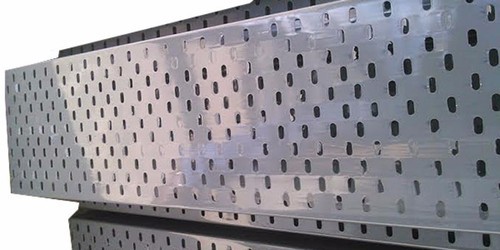 | MS Painted Perforated Type Cable Trays ₹108 Our company is engaged in offering supreme quality MS Painted Perforated Type Cable Trays that are widely used for providing circulation of cables... View product → |
 | Cable Trays & Accessories Perforated Type Cable Tray are ideal to install large volume of heavy duty power cables. View product → |
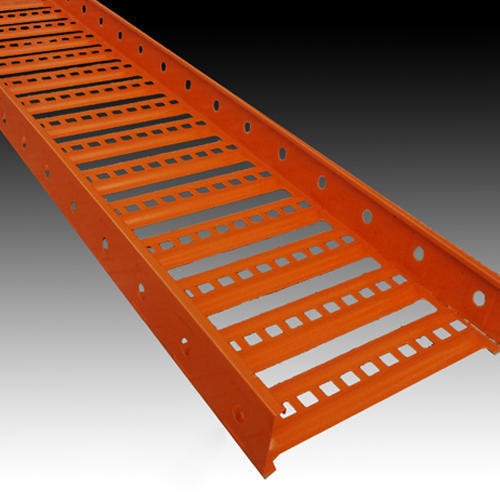 | Powder Coated Ladder Type Cable Trays 99 We are known for designing Powder Coated Ladder Type Cable Trays that are widely installed in industries, malls, railway stations, airports, office... View product → |
 | MS Painted Ladder Type Cable Trays ₹115 We are offering MS Painted Ladder Type Cable Trays that are chiefly used for distribution of power and communication cables. View product → |