

Electrical installations in industrial buildings, commercial facilities, data environments, manufacturing plants, and infrastructure projects often involve hundreds of power, control, instrumentation, and communication cables. Managing these cables efficiently requires more than simply providing a pathway from one point to another. The supporting system must help with ventilation, accessibility, segregation, maintenance, and long-term cable protection.
This is where working with a Perforated Cable Tray Manufacturer in Noida becomes relevant for electrical contractors, EPC companies, MEP teams, and project consultants handling installations across Greater Noida and the wider Uttar Pradesh industrial region.
Why Perforated Cable Trays Are Widely Used
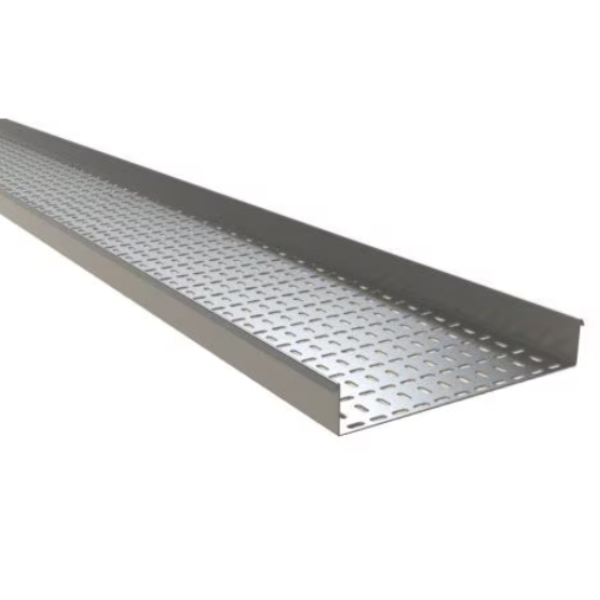
A perforated cable tray has openings along its base and sometimes its sides. These openings reduce unnecessary material weight while allowing airflow around the cables.
The design can be useful where cables need continuous support without being enclosed inside a completely closed system. Depending on project requirements, perforated trays may be considered for power distribution cables, control wiring, instrumentation cables, and other electrical services.
The perforations also provide convenient points for cable ties and fastening arrangements where required.
Cable Support Is Only One Part of the Design
Choosing a tray purely according to cable width can lead to problems later. Project teams should consider the complete installation environment.
Important factors include:
- Cable quantity and overall load
- Cable diameter and bending requirements
- Indoor and outdoor exposure
- Available installation space
- Required tray width and depth
- Support spacing
- Corrosion conditions
- Future cable additions
- Routing changes
- Maintenance accessibility
A tray system should provide sufficient capacity for the present installation while considering reasonable future expansion.
For industrial projects in Noida and Greater Noida, this can be particularly important because production lines, electrical panels, automation equipment, and utility systems may be expanded as facilities develop.
Ventilation Can Influence Cable Management
Electrical cables generate heat when carrying current. How much heat must be managed depends on cable type, loading, grouping, ambient conditions, and installation design.
Perforated construction can allow more air movement than a fully enclosed cable management arrangement. However, ventilation alone does not determine cable performance. Electrical designers must still consider cable manufacturer recommendations, applicable standards, grouping factors, current-carrying capacity, and the specific project environment.
This makes tray selection an engineering decision rather than simply a purchasing decision.
Installation Accessibility Matters
Cable routes often require inspection, additions, replacement, and maintenance during the life of a facility. A well-planned perforated tray system keeps cables accessible while maintaining an organized route.
Installers should also consider how bends, tees, reducers, cross sections, covers, clamps, supports, and joining components will integrate with the main tray.
S.V. Metals & Extrusions Pvt. Ltd. manufactures cable management products for project requirements involving different tray configurations and electrical accessories. For contractors working across Greater Noida, Noida, and Delhi NCR, sourcing compatible trays and accessories can simplify planning for larger installations.
What Should Be Specified Before Ordering
Before sending an enquiry to a manufacturer, prepare basic technical information such as tray dimensions, material, thickness, finish, approximate quantity, accessory requirements, and project environment.
Drawings or a bill of quantities can provide further clarity for complex projects.
A Perforated Cable Tray Manufacturer in Noida can respond more accurately when the requirement is technically defined instead of being limited to a general request for cable trays.
Ultimately, effective cable management begins with understanding what the installation actually demands. Correct tray dimensions, suitable material, appropriate supports, compatible accessories, and thoughtful routing together create a system that remains manageable as the electrical installation grows.