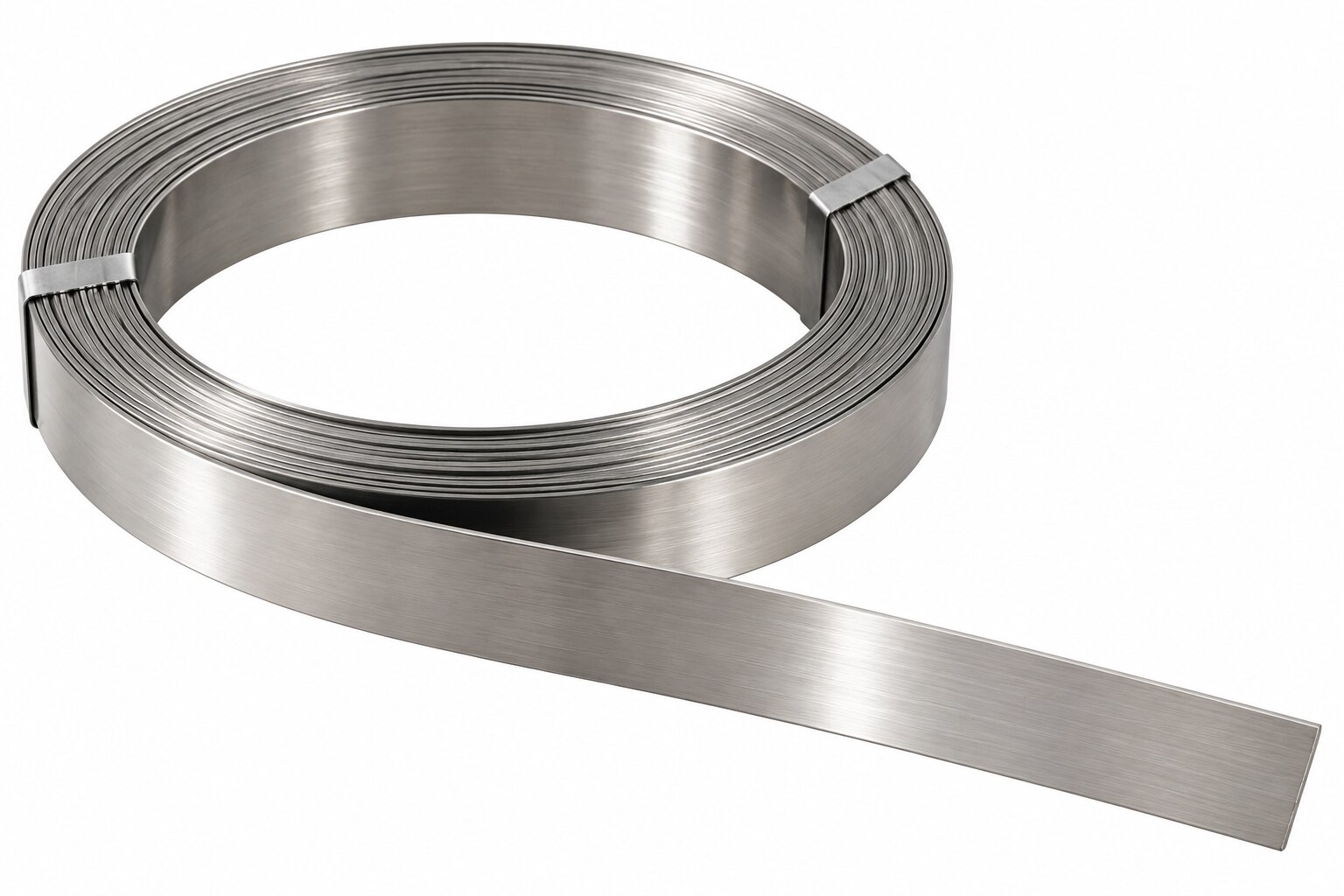
Stainless steel earns its higher cost when corrosion, access constraints and mixed-metal risks threaten the service life of galvanized steel or copper. By the end, you will be able to assess the site, choose between 304 and 316 or 316L, size the strip from fault conditions, and write a purchase specification that covers the strip and its connections.
Key takeaways
- Choose stainless when corrosion life outweighs higher resistance and purchase cost.
- Match 304 or 316 stainless to chloride, chemical and moisture exposure.
- Size for fault current, duration, mechanical strength and corrosion allowance.
- Specify grade, dimensions, finish, test documents and connection requirements before ordering.
When does stainless steel justify its premium over other earthing metals?
Choose a stainless steel earthing strip when corrosion life, mechanical survival and difficult replacement outweigh its higher resistance and purchase cost. Stainless steel is not a low-resistance substitute for copper: at 20 °C, 304 or 316 stainless steel measures about 0.72–0.75 µΩ·m, compared with 0.0172 µΩ·m for annealed copper.
A 25 mm × 3 mm strip is roughly 9.6–10 mΩ/m in stainless steel but about 0.23 mΩ/m in copper.
| Option | Main advantage | When it applies |
|---|---|---|
| Galvanized steel | Low cost and practical strength | Dry or moderately aggressive sites where zinc coating life is adequate |
| Copper | Lowest resistance and strong conductivity | High fault-current performance, compact conductors or low-voltage-drop requirements |
| Copper-clad steel | Copper surface with steel strength | Buried electrodes where cost and mechanical strength must be balanced |
| Aluminium | Low mass and cost | Approved above-ground systems away from wet, contaminated joints |
| Stainless steel | Corrosion resistance and durable appearance | Chloride exposure, coastal sites, wastewater plants, chemical facilities or inaccessible buried routes |
The galvanized steel comparison changes sharply when soil chemistry or zinc loss makes replacement likely. For copper versus stainless steel earthing strip, choose stainless for durability rather than lower earth resistance; soil resistivity, electrode geometry and the soil interface usually dominate that result.
Specify 316 or 316L instead of 304 where chlorides are present, and engineer every mixed-metal connection because wet stainless-to-copper, zinc or aluminium joints can suffer galvanic corrosion. Industrial earthing applications still require fault-current and disconnection-time sizing, not area alone.
How should soil, moisture and chemical exposure determine the stainless grade?
Select the stainless grade from the corrosion environment, not soil resistivity alone. Soil resistivity and earthing corrosion answer different questions: resistivity predicts electrode resistance, while chlorides, pH, sulfates, moisture and contamination determine metal loss. Low-resistivity soil can provide good electrical performance and still attack the strip.
1. Measure soil resistivity at the planned burial depth and record seasonal moisture. Check drainage, waterlogging, drying and rewetting cycles; stagnant water and oxygen-depleted pockets increase local attack.
2. Test soil or process water for chlorides, pH and sulfates. Chlorides favour pitting and crevice corrosion, especially near coastal sites, wastewater, chemical handling and de-icing salt. Do not treat sulfate content alone as a grade decision.
3. Investigate stray DC currents from rail systems, battery plants, cathodic-protection systems and buried power equipment. DC leakage can accelerate anodic metal loss even where soil chemistry appears acceptable.
4. Map every connection to galvanized steel, zinc, aluminium or copper. Wet dissimilar-metal contact creates galvanic corrosion; specify a connector rated for that metal pair, then provide sealing and drainage.
304 stainless steel earthing strip suits clean, well-drained soil with low chloride exposure. Choose a 316 stainless steel earthing strip for chloride-bearing or chemically contaminated environments, but do not call it immune in stagnant saline crevices. Use 316L stainless steel where welded joints face corrosive service; its lower carbon content reduces weld-related sensitisation.
Stainless also has far higher resistivity than copper, so grade selection is for durability and compatibility, not lower conductor resistance.
How do you size and document a stainless earthing strip?
A 25 mm × 3 mm strip gives 75 mm², but that number alone does not complete earthing strip sizing. Calculate prospective fault current, clearing time, allowable conductor temperature and installation method; then select width and thickness using the adiabatic equation S = I√t/k or the applicable tabulated method.
Use the k value for the stainless grade and specified starting and final temperatures, not a copper assumption.
IEC 60364-5-54 separates protective-conductor sizing from electrode design. Apply IS 3043 earthing standards to the installation, and state whether the strip serves protective bonding, functional earthing, lightning earthing or more than one function.
Electrode resistance depends chiefly on soil resistivity, length, spacing, depth and soil contact—not on choosing stainless steel as a low-resistance substitute for copper.
Dimension the strip for mechanical strength during installation and service. Consider pulling forces, unsupported spans, vehicle impact, vibration, bend radius and buried-joint strength, then add a corrosion allowance based on recorded soil and chemical exposure.
Keep the calculation package with the purchase record:
- Prospective fault current and clearing time at each relevant source
- Stainless grade, resistivity, cross-sectional area, width and thickness
- Adiabatic or tabulated calculation, k value and allowable temperature
- Burial or exposure conditions and corrosion allowance
- Joint materials, fastener grade, torque, protection and any required test evidence
If lightning protection is included, identify IEC 62305 and IEC 62561-1 separately; IEC 62561-1 does not automatically cover every industrial protective-bonding connection.
How do you install the strip without making the connection the weak point?
A buried strip rarely fails in the middle; it fails at a wet, inaccessible joint. Plan stainless steel earthing strip installation as a continuous route, with joints in inspection pits or other accessible locations rather than beneath foundations or standing water.
Prepare a firm, level trench and remove stones that could dent the strip. Provide drainage so water does not pond around earthing strip joints. Set the burial depth from the design drawings and local code, maintaining cover that protects the strip from vehicles, excavation and frost.
Do not force sharp bends; use a generous radius that avoids kinking or cracking the conductor.
Use only clamps approved for the strip grade, dimensions and fault duty, and tighten them to the specified torque with compatible washers and bolts. Exothermic welding can provide a permanent connection, but use a mould and weld metal qualified for stainless steel, then inspect the finished joint.
- Clean heat-tinted weld zones using the specified pickling, passivation or equivalent treatment. Carbon-steel tools can embed iron and create rust staining.
- Protect exposed sections from impact and water traps; seal transitions without preventing drainage or inspection.
- Do not connect stainless directly to galvanized steel, zinc, aluminium or copper without an engineered transition. A connector rated for that metal combination, sealed contact and drainage arrangement controls galvanic corrosion earthing connection; an ordinary clamp does not.
What should the purchase specification and inspection checklist contain?
Specify the function before buying: protective bonding, functional earthing, lightning earthing, or a combination. That decision controls the sizing method, test evidence and standards scope; a stocked 25 × 3 mm strip is 75 mm², not automatic proof of compliance.
- State stainless grade, finish, width, thickness, length tolerance and allowable section loss. Require 304, 316 or 316L by designation, not simply “stainless steel.”
- Record conductivity or resistivity at 20 °C. Stainless is far more resistive than copper: 304/316 is about 0.72–0.75 µΩ·m, so verify prospective fault current, clearing time, temperature limit and the calculation method under IEC 60364-5-54.
- Name every connection part: compatible lug or clamp, washer, bolt material, joint compound or sealant, galvanic-isolation method and installation torque in N·m.
- Require dimensional inspection, material certificates, surface examination, continuity readings and any fault-current or lightning-current test reports.
- State the standards’ purpose. BS 7430 covers protective earthing practice; IEC 62305 covers lightning protection; IEC 62561-1 covers connecting components for lightning-protection systems, not every industrial bonding joint.
Keep mill certificates, batch numbers, inspection records, torque sheets and installation drawings with the handover file. A specialist stainless steel earthing strip supplier is worth considering when the project combines chloride exposure, inaccessible buried joints and lightning protection. S.V. Metals & Extrusions Pvt.
Ltd. can be evaluated against this earthing strip procurement checklist rather than selected on catalogue wording alone.
Related product
 | Earthing Galvanized Earthing Strip View product → |
Frequently asked questions
When does stainless steel justify its premium over other earthing metals?
Stainless steel justifies its premium when corrosion life, mechanical survival and difficult replacement outweigh its higher electrical resistance and purchase cost. It is not a low-resistance substitute for copper.
How should soil, moisture and chemical exposure determine the stainless grade?
Assess soil moisture, chlorides, industrial chemicals and exposure conditions before choosing the grade. Use 304 for less aggressive environments and evaluate 316 when chloride exposure or coastal conditions raise corrosion risk.
How do you size and document a stainless earthing strip?
Size the strip using fault current, fault duration, allowable temperature rise, mechanical loads and corrosion allowance. Document the grade, dimensions, design basis, test results, route and connection details.
How do you install the strip without making the connection the weak point?
Use compatible lugs, bolts and washers, prepare clean contact surfaces, control tightening torque and protect the joint from moisture and galvanic corrosion. Inspect and test every connection after installation.
What should the purchase specification and inspection checklist contain?
Specify the stainless grade, strip dimensions, tolerances, finish, edge condition, heat or batch identification, material certificate, electrical tests, surface inspection and connection hardware.