A powder-coated finish is not, by itself, proof that a raceway will survive the installation environment. By checking exposure, base metal, coating specification, tray design, cable arrangement and load data, you can decide where it is appropriate and when another system is the safer choice.
Key takeaways
- Use powder-coated raceway in dry indoor areas with limited chemical and impact exposure.
- Request substrate, pretreatment, powder chemistry and coating-thickness details before approval.
- Select tray form according to cable access, support, segregation and route changes.
- Check cable fill, heat dissipation and structural load before fixing dimensions.
Match the raceway finish to the installation environment
Use powder-coated raceway for indoor cable routing in dry office floors, retail buildings, warehouses, plant rooms and indoor service corridors where ultraviolet exposure, standing water, chemical contact and mechanical impact are limited. Powder coating is a finish, not a corrosion-resistance classification: performance depends on the steel substrate, pretreatment, powder chemistry, thickness, edge coverage and exposure.
Cut ends, drilled holes, grinding, impact points and unsealed joints can expose steel and start corrosion.
Check these conditions before selecting the finish:
- Measure relative humidity and identify condensation points.
- Record wash-down frequency, cleaning chemicals and process vapours.
- Confirm the ambient temperature range and required service life.
- Treat direct weather, marine or chloride-rich air, continuous wetting, aggressive chemicals, buried routes and frequent impact as warning conditions.
Interior epoxy can resist chemicals but may chalk in sunlight. Exterior-grade polyester is the more suitable powder family for weather and ultraviolet exposure; specify a UV-resistant powder coating for cable tray only when the system is qualified for that exposure.
| Option | Suitable environment | Main caution |
|---|---|---|
| Powder-coated steel | Controlled dry interiors | Damage exposes steel |
| Pre-galvanized steel | General indoor service | Cut edges need protection |
| Hot-dip galvanized steel | Wet or outdoor routes | Confirm coating repair method |
| Stainless steel or aluminium | Chloride-rich or chemical zones | Higher material and compatibility demands |
| Painted mild steel | Low-demand, maintainable interiors | Requires regular field maintenance |
For continuously wet or corrosive installations, choose hot-dip galvanized steel, stainless steel, aluminium or a qualified protective-coating system instead.
Compare the substrate and demand a complete coating specification
Choose the substrate and coating as a system; colour and nominal steel thickness do not determine corrosion performance.
| Option | Best fit | Limitation |
|---|---|---|
| Powder-coated steel | Controlled interiors with limited moisture, chemicals and impact | Cut edges and damage expose the steel |
| Pre-galvanized steel | Factory-coated general service with moderate exposure | Protection is weaker at cut and drilled areas |
| Hot-dip galvanized steel | Wetter interiors, outdoor routes and stronger general corrosion protection | Inspect cut areas, joints and dissimilar-metal contacts |
| Stainless steel | Chloride-rich, demanding chemical or hygiene environments | Specify the grade for the exposure |
| Painted mild steel | Lower-demand locations where field maintenance is acceptable | Requires planned repainting and corrosion repairs |
Drilled holes, cut ends, grinding, impact points and unsealed joints breach or remove the coating. Corrosion often starts at these small defects, not across the intact face.
Request a complete specification covering:
- Powder type, powder coating thickness microns, pre-treatment for powder coating, adhesion-test result, RAL colour code and operating-temperature range
- ASTM B117 salt spray test method, scribe geometry and evaluation criteria
- A written powder coating repair procedure and a compatible touch-up system for field damage
ASTM B117 hours do not predict service life without the substrate, scribe geometry and acceptance method. ASTM A780 is a repair reference for hot-dip galvanized coatings, not an automatic repair method for powder-coated steel.
Check galvanic corrosion at fasteners, splice plates and supports, and where the raceway contacts aluminium or stainless steel. Isolate incompatible metals in wet or salt-contaminated service.
Choose the tray form before planning the cable route
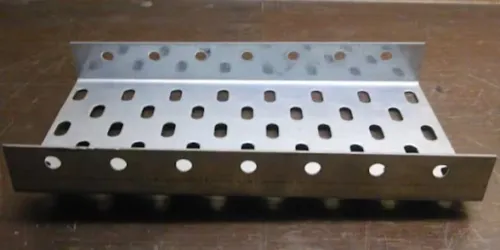
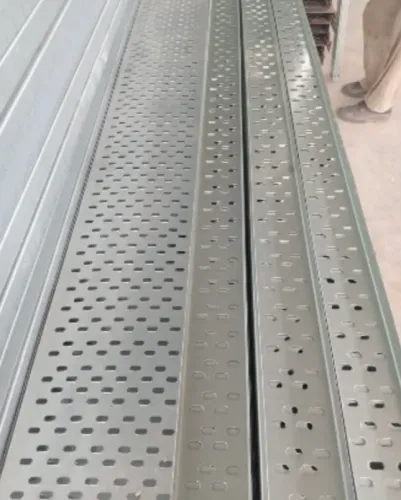
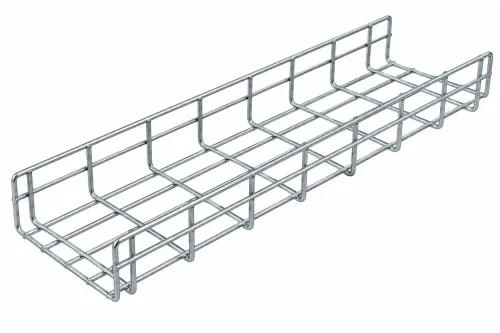
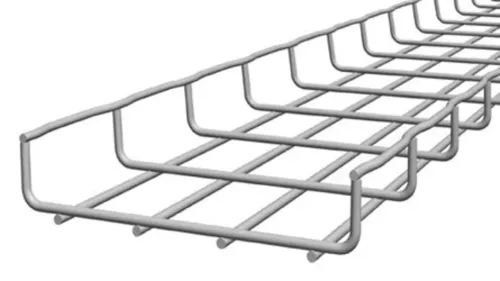
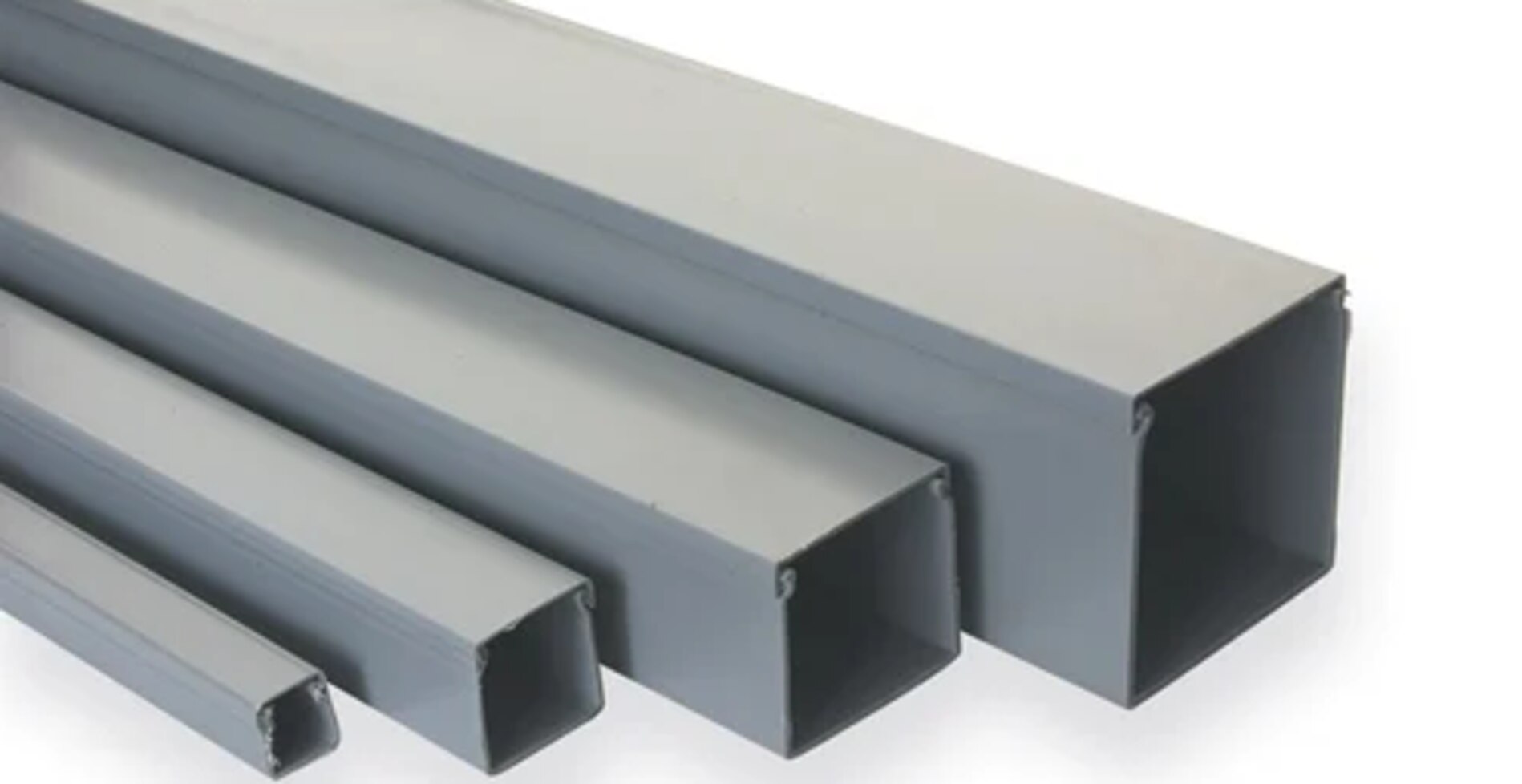
Choose the raceway form by cable duty, not appearance. Use solid bottom raceway vs perforated tray when falling debris, accidental contact or local contamination demands more protection; accept higher dust retention and restricted ventilation. For perforated cable tray selection, weigh access, drainage, cleaning effort and heat release.
| Option | Best fit | Trade-off |
|---|---|---|
| Solid-bottom raceway | Contaminated areas or cables needing close physical protection | Harder cleaning, less ventilation; covers may still be required |
| Perforated tray | Moderate protection, easy access, drainage and better heat dissipation | Less shielding from impact and debris |
| Ladder tray for power cables | Heavy cables, long spans and maximum ventilation | Not suitable where a continuous bottom or close protection is required |
Separate power, control, instrumentation, data, fire-alarm, communication and fibre-optic circuits using separate trays, specified spacing or dividers under the project rules. Mixing them can create interference, violate circuit separation rules or complicate maintenance.
Route bends around the manufacturer-stated minimum bend radius. Use smooth fittings, prevent cables from piling at turns, and keep covers, splice plates, junction boxes and inspection points reachable. Covers add protection but reduce ventilation, so include them in the thermal check.
Cable tray is a defined wiring method, not a universal replacement for conduit. NEC Article 392 cable tray governs tray systems, permitted cable types and installation conditions; use conduit where the wiring method, physical protection or enclosure requirement calls for it.
Size for cable fill, heat and structural load together
1. Size the system by width, depth, heat and structure—not width alone. For a cable tray sizing calculation, list every cable’s outside diameter and use πd²/4 to calculate each cross-sectional area; sum those areas, add the project-required reserve for future circuits, then confirm the governing standard or consultant requirement before applying any fill limit.
No universal fill percentage should be assumed.
2. Verify the cable tray load rating from the manufacturer’s tables for the selected width, depth, material, fittings and orientation. Include cable weight, concentrated loads, splice locations, support spacing and the stated deflection limit; a tray that passes cable fill from outside diameter can still fail between supports or at a fitting.
3. Treat fill and ampacity as separate checks. Grouping, ambient temperature and conductor arrangement can reduce allowable ampacity even when the area calculation passes. Include covers, solid-bottom construction and restricted ventilation in the thermal assessment, because trapped heat can make an otherwise acceptable route unsafe.
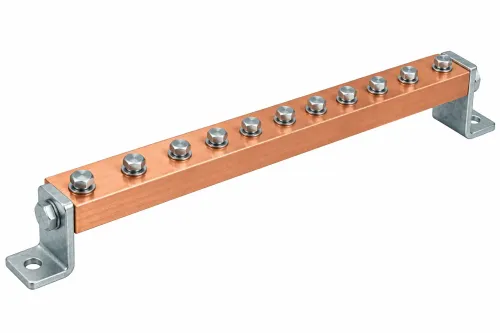
4. Design grounding separately: powder on steel does not provide electrical continuity. If the metallic tray is intended to serve as an equipment grounding conductor, confirm the product listing, bonded splice plates, bonding jumpers and continuity across painted joints. Finalise performance and load class against IEC 61537 cable tray and the project specification.
Approve the system with an installation and supplier checklist
Approve only when the design package and supplier file connect every drawing requirement to site execution. That is the purpose of a cable tray installation checklist and a commercial cable routing specification.
1. Require coordinated drawings showing the route, tray form, width, depth, support span, cable separation method, covers, fittings, expansion provisions and access to junction points. Confirm load tables include span, cable weight, fittings, splice locations and deflection limits.
2. Define installation controls before delivery: protect cut edges and drilled holes, prohibit unsealed sharp edges, specify the compatible repair procedure, and submit a sample of the proposed repair product. Check dissimilar-metal contacts at fasteners, supports and splice plates; isolate aluminium or stainless steel interfaces in damp or salt-contaminated areas.
3. Do not treat the finish as fire protection. Every cable tray firestop penetration through a rated wall or floor needs a tested firestop assembly for the actual cables, tray and opening. The tray is not automatically fire-rated and does not form a smoke barrier.
4. Request coating data, substrate and material certificates, pretreatment stages, coating thickness, adhesion results, salt-spray test basis, load tables, installation instructions, inspection records and repair documentation. ASTM A780 applies to damaged hot-dip galvanized coatings, not automatically to powder-coated steel.
5. Require installers to test cable tray bonding continuity across painted joints, splice plates and jumpers. When comparing a bulk supplier such as S.V. Metals & Extrusions Pvt. Ltd., apply the same evidence checklist rather than accepting “powder coated” as a complete specification.
Approve powder-coated raceway for controlled interiors with documented performance. Change the substrate, coating system or wiring method when exposure, impact, temperature or code requirements exceed that evidence.
Related products
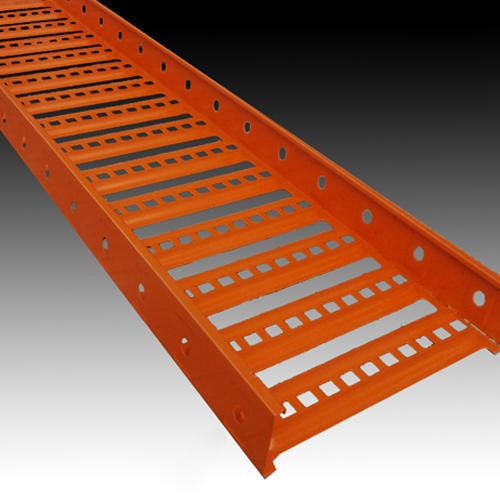 | Powder Coated Ladder Type Cable Trays 99 We are known for designing Powder Coated Ladder Type Cable Trays that are widely installed in industries, malls, railway stations, airports, office... View product → |
 | Powder Coated Perforated Type Cable Trays ₹101 We are offering Powder Coated Perforated Type Cable Trays that are used in industries, metro stations, office buildings, schools etc. View product → |
Frequently asked questions
Where is powder-coated raceway suitable?
Use it for indoor cable routing in dry offices, retail buildings, warehouses, plant rooms and service corridors where ultraviolet exposure, standing water, chemical contact and mechanical impact are limited.
What coating details should you request from a raceway supplier?
Request the steel substrate, pretreatment process, powder chemistry, specified coating thickness, edge-coverage method and exposure limitations.
How do you choose the right raceway form?
Choose the form according to cable access needs, support requirements, route changes, cable segregation and the space available for installation.
What must you check when sizing cable raceway?
Check cable fill, heat dissipation, cable weight, tray span, support spacing and the total structural load together.