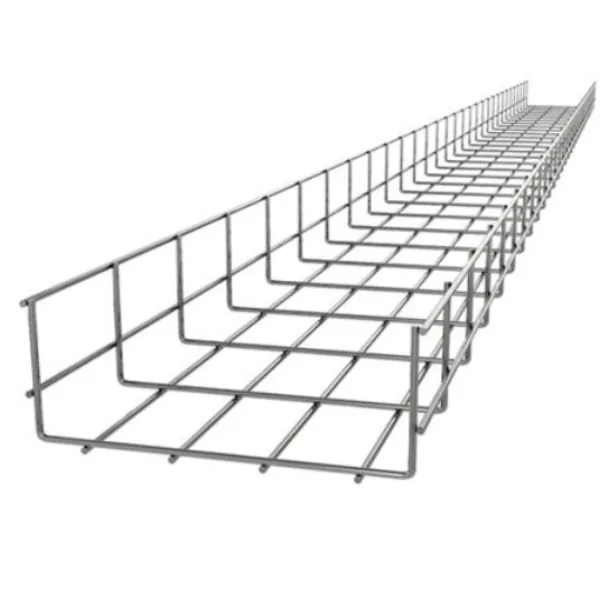
Modern facilities carry far more than conventional power wiring. Data communication, instrumentation, control and low-voltage networks may need flexible pathways that can adapt as equipment layouts change. Wiremesh Cable Trays provide an open basket-style structure that can be useful for these requirements.
Their construction gives engineers a cable pathway with high visibility and easy access, making them particularly relevant in installations where cabling may need frequent modification.
Flexible Routing Is a Major Advantage
Cable routes in offices, industrial automation areas and data-intensive facilities do not always remain unchanged.
New equipment may be installed, network points can be relocated and additional control cables may be introduced.
An open wire mesh arrangement allows installation teams to access the cable route without removing extensive covers or panels.
This can make additions and changes easier to manage.
The Application Determines Suitability
S.V. Metals & Extrusions Pvt. Ltd. describes Wiremesh Cable Trays as suitable for cabling ranging from instrumentation and data communication wiring to low-voltage distribution and other electrical applications.
However, product selection should always begin with the actual project requirement.
Engineers need to consider:
- Cable type
- Cable quantity
- Combined load
- Required tray width
- Support spacing
- Installation environment
- Future expansion
- Project specifications
A system appropriate for light communication cables should not automatically be assumed suitable for every heavy electrical route.
Open Construction Improves Visibility
One practical benefit of basket-style trays is that cables remain visible.
Maintenance teams can follow cable routes, identify congestion and access wiring without dismantling a closed pathway.
This can be valuable in facilities where troubleshooting and configuration changes occur regularly.
The open structure also allows airflow around the installed cables.
Installation Planning Still Matters
Although wiremesh systems can provide flexibility, good planning remains essential.
Routes should be coordinated with HVAC ducts, piping, structural elements and other electrical services before installation.
Support points should also be planned rather than added wherever convenient on site.
Changes in direction, drops and equipment connections should be identified from drawings wherever possible.
Material Selection Depends on Conditions
Wiremesh products may be produced using different materials and finishes to suit various operating environments.
The company's listed range includes MS, GI and stainless steel options, including SS304 and SS316 configurations, with finishing options that vary by product requirement.
This gives project teams different possibilities when specifying systems for particular environments.
Industrial and commercial projects in Greater Noida frequently involve a mix of indoor production, utility and technical areas. Selecting the appropriate construction for each zone is more practical than applying one specification everywhere.
Think About Future Cable Changes
The strongest case for Wiremesh Cable Trays often appears where flexibility and accessibility are important.
Before procurement, project teams should estimate not only today's cable quantity but also whether equipment additions, automation upgrades or network changes are likely.
Planning additional usable capacity can make those changes easier to accommodate.
For MEP consultants, electrical contractors and project managers, wiremesh systems can provide an efficient cable management option when their open construction aligns with the load, environment and maintenance requirements of the project.
Keywords