A galvanised tray can look intact while trapped moisture, damaged zinc, loose joints or moving cables create a serious site defect. You will learn how to identify the failure type, inspect the places where damage starts, and decide whether to repair the tray, correct the installation or replace the section.
Key takeaways
- Treat white rust differently from red rust before choosing a repair.
- Check water traps, sharp edges, cable abrasion and tray movement first.
- Test electrical continuity across joints, bonds and repaired sections.
- Replace trays when corrosion reduces strength, drainage or cable protection.
How hot-dip galvanising protects steel—and where protection fails
Hot-dip galvanising protects steel through a bonded zinc coating formed when the fabricated tray is immersed in molten zinc. Zinc blocks water and oxygen, then sacrifices itself near a small exposed spot, so a minor cut edge does not automatically mean immediate steel corrosion.
Protection is not unlimited: persistent moisture, chloride-bearing air or wash water, acidic contamination, and wet dirt or bird droppings consume zinc faster.
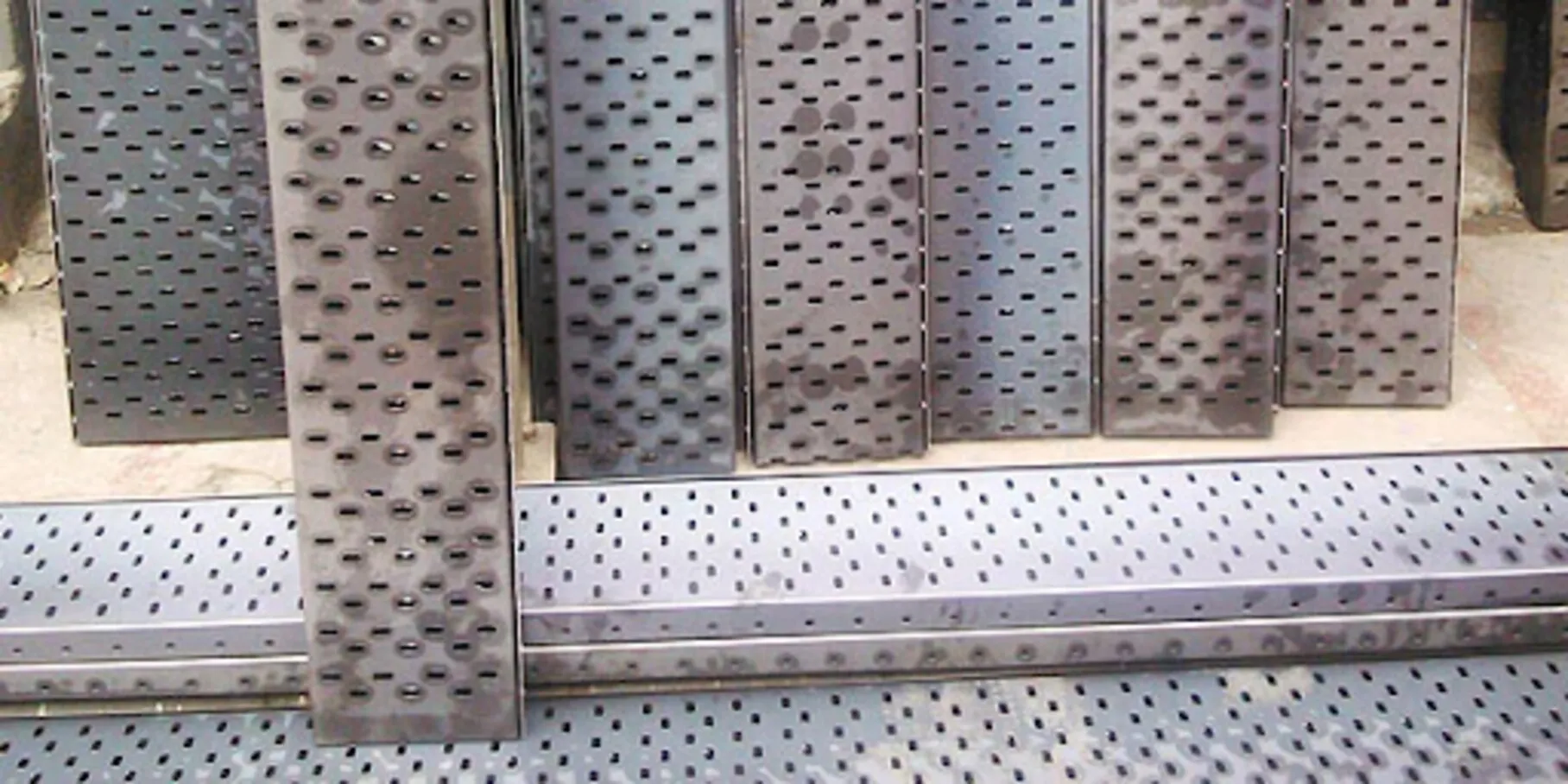
The manufacturing sequence matters. A tray fabricated first and then hot-dip galvanised has coated edges and hole walls; galvanised sheet punched, cut and formed afterward leaves more exposed steel and can damage zinc around perforations. Perforations do not inherently cause premature corrosion, but their ledges collect dust, salts and water.
Defects that require close inspection include:
- Large cuts, gouges, drilled openings and deep scratches
- Bare patches, zinc ash deposits hiding damaged coating, and flaking zinc
- Welds and heat-affected zones made after galvanising
- Burrs, sharp corners, protruding bolt threads and distorted edges
| Defect | What is exposed or threatened | Why it matters |
|---|---|---|
| Small cut edge | Nearby steel receives sacrificial protection | Inspect rather than reject automatically |
| Large gouge or drilled hole | Exposed steel lacks enough zinc coverage | Moisture retention drives red rust |
| Post-galvanising weld | Weld zone loses zinc | Fumes require controlled welding; clean and repair the coating |
| Burr or sharp perforation | Steel may remain coated, but cable insulation is exposed | Wind movement can rub through solar cables |
These are the recurring hot dip galvanised cable tray problems solar sites reveal when coating condition and cable routing are checked separately.
How to distinguish white rust, red rust, dirt and galvanic attack
A white, powdery film usually means wet-storage stain on the zinc, not rusting steel. Red-brown scale means exposed steel is actively corroding. Dirt and galvanic attack need different checks.
| Appearance | What it indicates | Conditions that accelerate it |
|---|---|---|
| White powder or fluffy grey deposit | White rust from zinc kept wet with little carbon dioxide; heavy deposits can mean zinc loss | Trapped water, tight stacking, condensation under modules, poor drainage, and wet storage |
| Orange or red-brown scale | Red rust on bare or depleted steel at a cut, scratch, weld, drilled hole, or worn edge | Persistent moisture, coastal chloride, fertiliser or pesticide residue, acidic or alkaline wash water |
| Brown, black, greasy, or caked deposit | Dirt, mud, bird droppings, zinc runoff, or contaminated anaerobic wet deposits; clean it before judging the metal | Standing water, dust retention, droppings, industrial pollution, and repeated wet-dry cycles |
| Localized attack beside another metal | Galvanic attack, where a dissimilar metal drives faster zinc loss at the contact or nearby wet area | Direct contact with copper, stainless steel, or aluminium plus rain, condensation, salt, or dirty water |
White rust can be superficial, but persistent deposits deserve inspection for remaining zinc thickness. Red rust is not dirt that needs washing away; it confirms the steel has lost its protective coating.
Look for a sharp boundary around bolts, clamps, or dissimilar-metal contacts when investigating galvanised perforated cable tray corrosion problems. Separating these signs prevents a failed tray from being replaced without correcting the moisture trap, contamination, or galvanic connection.
A field troubleshooting sequence for corroded galvanised trays
Use a disciplined hot dip galvanised tray troubleshooting sequence, starting at the lowest wet point rather than the most visible stain. Isolate electrical hazards before touching the tray, then record photographs, GPS or grid location, tray size, support spacing, nearby metals, and the date.
Trace the defect across overlaps, splice plates, supports, cable bundles and end caps.
- Clean a small test area with water and a non-metallic brush. Remove mud, bird droppings, salt and zinc runoff without grinding away sound zinc.
- Check whether the deposit returns after drying. Persistent red rust indicates exposed steel; a white powder points to zinc corrosion; black, soft deposits indicate prolonged wet contamination.
- Measure coating thickness on clean, representative areas with a calibrated magnetic or eddy-current gauge. Compare sound tray, damaged zones and cut edges.
- Inspect perforations, drilled holes, gouges and welds for bare steel, trapped water and heat-affected zinc loss. Do not weld on an installed tray without ventilation for zinc-oxide fumes and a specified coating repair afterward.
- Correct blocked perforations, level sections, pocket-forming overlaps and leaking end caps before judging coating performance.
| Finding | Verify on site | Decision signal |
|---|---|---|
| Red rust | Exposed steel, active spread, pitting | Assess remaining section thickness |
| White powder | Damp zinc surface, no steel exposure | Clean and improve drying |
| Black deposit | Wet mud, salts or organic contamination | Remove contamination and water trap |
| Local weld or large cut | Zinc loss around modification | Require engineered coating repair or section replacement |
| Bent tray or loose splice | Deformation, movement or poor bonding | Investigate support and continuity defects before repair |
Inspecting cable damage, drainage, movement and electrical continuity
A tray can look sound and still cause solar cable tray damage. De-energise the circuit before inspection, then examine the tray with a light and gloved hand; do not run your fingers across an unverified edge. Check every opening, splice and support, not only the exposed top surface.
Inspect each run for:
- Burrs around punched holes, drilled openings and field-cut ends; remove them or install approved edge protection or grommets.
- Sharp corners, protruding bolt threads and loose splice hardware touching insulation.
- Cables resting on perforations or rubbing against the tray during wind movement; add restraint without crushing the cable.
- Blocked perforations, trapped mud, water-filled end caps and horizontal overlaps that form pockets.
- Unsupported loops, rigid bridges between moving array sections and tray joints near tracker articulation; compare movement with the tray and tracker manufacturer’s limits.
- Cable quantity, grouping, spacing and support span against the tray schedule; width alone does not prove adequate fill, load or ampacity.
A splice is also a bonding path. Remove paint, dirt and thick repair coating from designated contact areas, tighten the specified hardware, and test continuity across every splice and from the tray to the bonding conductor with a low-resistance ohmmeter. Record the readings against the project specification; never assume a bolted joint is electrically adequate.
Inspect the lowest points, overlaps, supports and areas beneath cable bundles for prolonged wetting or hidden corrosion. Correct the water path before recoating. A visually clean tray with failed continuity, cable abrasion or excessive thermal loading remains unsafe.
When to repair, replace or change the tray specification
Repair a coating defect only when the steel remains sound, the damaged area is local, and the water path has been corrected. Replace the section when corrosion has reduced metal, holes have enlarged, the tray is bent, or cable support and bonding cannot be restored.
| Option | What it means | When it applies |
|---|---|---|
| Zinc repair | Clean to sound metal, remove rust, then apply zinc-rich repair coating to the manufacturer’s specified dry-film thickness | Small scratches, drilled holes, cut edges or isolated bare patches away from persistent wetting |
| Replacement section | Remove the damaged length and install a matching, bonded section with sound supports and fasteners | Pitting, perforation, severe gouging, deformation, failed splice joints or corrosion beneath cable bundles |
| Different detail or product | Change drainage, supports, overlap, material or tray form instead of repeating the failed arrangement | Standing water, blocked perforations, trapped end-cap water, moving interfaces, chloride exposure or recurring galvanic contact |
Do not weld an installed galvanised tray as a routine repair. Welding removes zinc from the weld and heat-affected zone, creates hazardous zinc-oxide fumes, and demands ventilation, cleaning and post-weld coating repair.
For galvanised perforated cable tray corrosion problems, fewer holes alone will not solve a wetting defect. During hot dip galvanised tray troubleshooting, ask for fabricated-then-galvanised tray sections where cut-edge exposure is a concern; S.V. Metals & Extrusions Pvt. Ltd. can help compare that manufacturing route with a pre-galvanised alternative.
Change the installation detail first if the same defect will otherwise return.
Related products
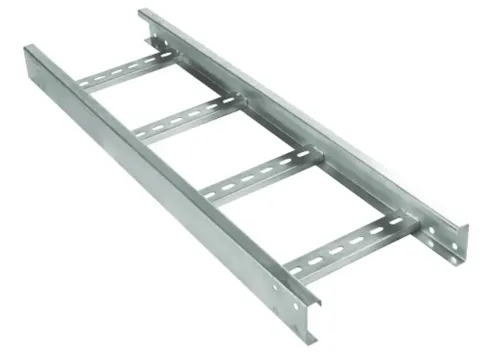
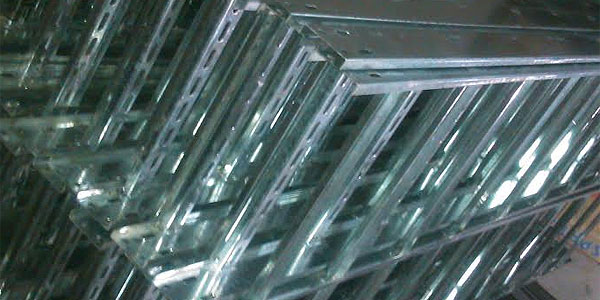 | Hot Dip Galvanized Ladder Type Cable Trays 113 Our company manufactures the finest range of Hot Dip Galvanized Ladder Type Cable Trays that is suited for heavy weight cables. View product → |
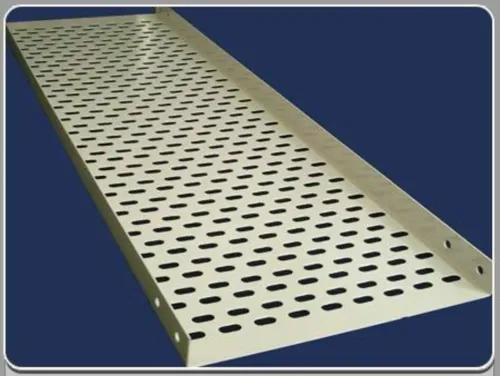
 | Hot Dip Galvanized Perforated Type Cable Trays ₹98 We are widely known for designing Hot Dip Galvanized Perforated Type Cable Trays that are highly durable and the holes provide necessary ventilation. View product → |
Frequently asked questions
How does hot-dip galvanising protect a cable tray?
A bonded zinc coating protects steel by blocking water and oxygen. Zinc also sacrifices itself near a small exposed area, so one cut edge does not automatically mean immediate steel corrosion.
How can you distinguish white rust from red rust on a galvanised tray?
White rust is a powdery white or grey zinc corrosion product, while red rust is orange or brown iron oxide showing that the underlying steel is corroding. Dirt and galvanic attack require different checks, including cleaning, inspecting nearby metals and examining drainage.
What should you check when troubleshooting a corroded solar cable tray?
Trace the corrosion source, inspect the zinc coating and steel thickness, check drainage and standing water, look for cable abrasion, allow for thermal movement, and test electrical continuity across tray joints.
When should you repair or replace a galvanised cable tray?
Repair superficial coating damage after cleaning and preparing the steel. Replace the tray when corrosion weakens perforations or supports, creates sharp edges, blocks drainage, damages cables or prevents reliable bonding and continuity.
Keywords