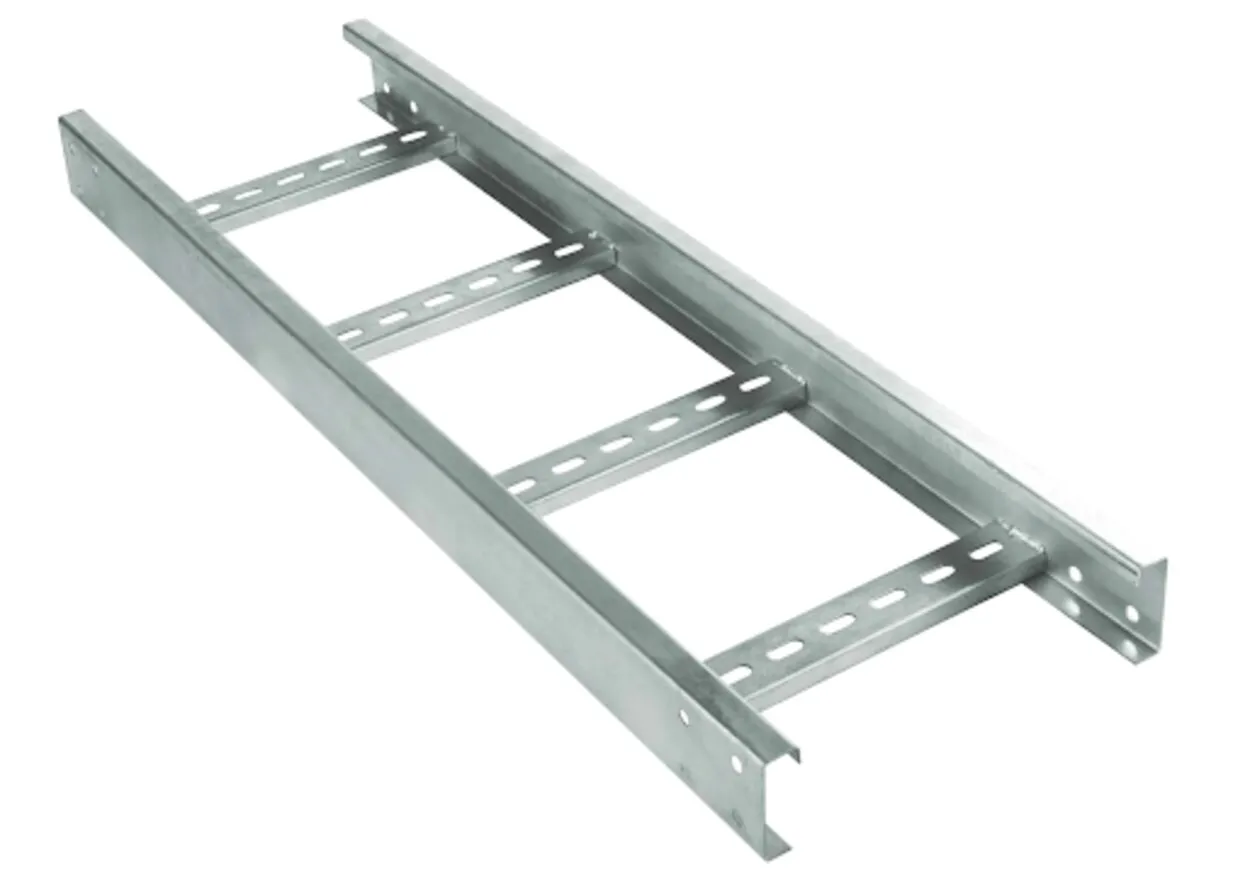
A tray quotation that says only “heavy duty,” “GI,” or “600 mm wide” leaves out the figures that determine fit, load performance, corrosion life and installation cost. By the end, you will be able to size the tray from the cable schedule, specify supports and finishes, compare supplier submittals and inspect delivered material against the purchase order.
Key takeaways
- Separate usable cable width from nominal and overall tray width.
- Allow cable spacing, spare capacity and the largest bend radius.
- Specify load, support span, finish and continuity requirements in writing.
- Make the supplier document dimensions, materials and test records for inspection.
Set the dimensional schedule before requesting prices
Set ladder type cable tray sizes Noida contractors will place on drawings and enquiries before asking for prices. Keep clear usable width and overall width as separate fields; nominal width, cable space and fitting width are different measurements.
| Dimension | Schedule requirement | Supplier confirmation |
|---|---|---|
| Width | 150, 300, 450, 600, 750 or 900 mm; add 100 or 1,200 mm only when the cable schedule requires it | State clear usable width and overall width separately |
| Side rails | 50, 75 or 100 mm high | Height is not proof of strength |
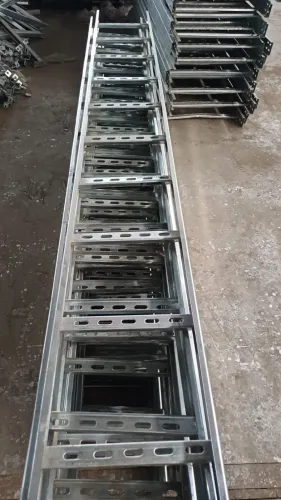
| Rungs | State rung spacing and usable rung width | Confirm the pitch for cleats, small cables and vertical clamps |
| Unit length | Name the required straight length | 2.4 m and 3 m are commercial conventions, not universal rules |
| Steel thickness | State rail, rung and splice-plate thickness separately | Confirm available thicknesses and material grade |
| Bends and fittings | State inside radius for horizontal bends, vertical inside and outside bends, tees, crosses, reducers and risers | Size the radius for the largest cable |
These ladder cable tray specifications prevent a cheap quotation from hiding missing dimensions. A fitting with the same nominal width as the straight tray can still fail if its inside radius is below the cable manufacturer’s minimum bending radius.
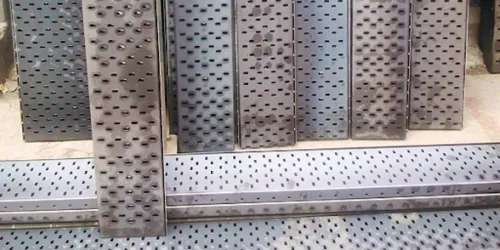
Identify every straight and fitting by route or drawing reference. Specify the hole pattern, splice type and accessory compatibility too; ordering only total tray metres leaves shortages at offsets, tees and risers. The schedule for ladder type cable tray sizes noida projects use is a drawing control, not merely a pricing request.
Calculate usable width from cables, spacing and bend radius
Choose tray width from the cable schedule, not from cable count or the widest attractive catalogue model. For ladder type cable tray specifications for contractors in Noida, record each cable’s outside diameter, quantity, circuit grouping, cleat width, required separation and manufacturer’s minimum bending radius.
Add these widths:
- Cable outside diameters
- Cleats and separators
- Required circuit separation
- Project-defined spare capacity
Do not apply an invented universal fill percentage. State the spare capacity in the project schedule.
| Location | Check before approval | Consequence of omission |
|---|---|---|
| Straight tray | Clear usable width, not overall width | Cables may fit only by compressing separation |
| Tee, cross or reducer | Measure the reduced internal passage | The route can narrow at the fitting |
| Vertical bend or riser | Inside radius from the largest cable | The cable can exceed its minimum bend radius |
| Fitting transition | Confirm cable-cleat and separator space | Restraint may become impossible |
A fitting with the same nominal width as the straight tray can still fail the manufacturer’s bending requirement. The largest cable governs the fitting radius.
Physical fit does not establish ampacity. Apply the applicable cable ampacity tables after considering grouping, ambient temperature, solar exposure, spacing between single-core conductors and the number of loaded circuits.
Rung pitch belongs in the ladder cable tray specifications. Keep it close enough to support small cables, vertical clamps and cleat locations, while providing secure restraint for single-core power cables against short-circuit forces. These checks form the usable-width basis for ladder type cable tray specifications for contractors in Noida.
Match load ratings, support spans and support types
A load figure has meaning only with its test span and deflection limit. Reject “heavy duty” and any quotation listing kg/m or kN/m without those two details.
As a comparison, NEMA VE 1 gives 8 ft load classes from 50 to 150 lb/ft, approximately 0.73 to 2.19 kN/m, at the stated 8 ft span and specified deflection limit. Do not adopt those figures as an Indian acceptance criterion: IEC 61537 and NEMA VE 1 use different verification conventions.
Before approving ladder cable tray specifications, check:
- Name the governing standard, tested support span, allowable deflection limit, concentrated-load requirement, test basis and certificate format.
- Compare the tested span with the proposed tray width, cable load, splice position and bend locations.
- Treat physical tray capacity separately from allowable cable load after deflection, dynamic forces, seismic restraint and installation conditions.
- Use trapeze supports for parallel services and wide trays; use cantilever brackets from walls or steel columns; use floor or pedestal supports for risers, heavy vertical transitions and routes with little overhead structure.
- Add supports near bends, tees, reducers, risers, joints and heavy cable-entry points instead of applying one spacing across the route.
A tray that passes at 1.5 m can fail at 2.4 m. Set spacing from the tested arrangement and actual route geometry, then require the supplier to show the load, span and deflection relationship on the submitted schedule.
Choose the finish for Noida exposure and preserve continuity
For ladder type cable tray specifications for contractors in Noida, match the finish to exposure rather than accepting “GI.” Indoor, dry plant rooms differ sharply from monsoon-wet roofs, and both differ from routes exposed to chloride, acid, alkali, ammonia or solvent vapour.
| Option | Exposure fit | Repair and installed-life implication |
|---|---|---|
| Pre-galvanized steel | Dry indoor routes; protected outdoor areas | Cut edges, drilled holes and fabricated joints need zinc-rich repair; life depends on sealing those weak points |
| Hot-dip galvanized after fabrication | Outdoor, humid and industrial routes | Specify ISO 1461, minimum coating mass or thickness, visual inspection and magnetic-thickness measurement; allow for hole growth, distortion and altered bolt fit |
| Painted mild steel | Dry indoor areas where appearance matters | Specify blast or chemical preparation, primer, topcoat and dry-film thickness; scratches expose steel and demand immediate repair |
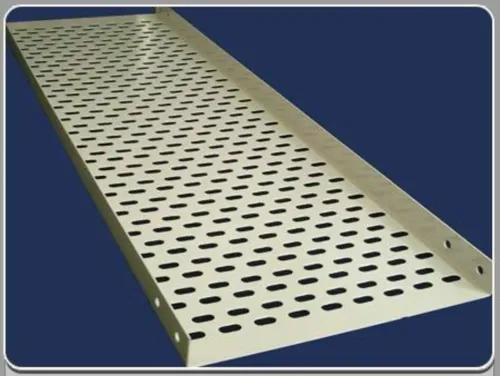
| Powder-coated steel | Indoor or sheltered routes needing a barrier finish | Specify pretreatment, powder system, cure and thickness; it does not repair damaged zinc or protect unprepared drilled and welded areas |
| Stainless steel | Named chemical or chloride exposure after compatibility review | Specify grade, weld treatment and passivation; higher purchase cost can produce longer installed life |
Require the galvanizing standard, coating mass or thickness, inspection method and cut-edge repair procedure in the order. Pre-galvanized sheet leaves fabrication damage to you; post-fabrication dipping creates a different coating condition.
Bond every splice, bridge expansion joints with a flexible bonding arrangement, and install a separate protective conductor when the electrical design requires one. Paint, powder coating and a loose splice interrupt continuity; a metallic tray is not automatically the protective earth conductor.
Write a purchase order that a supplier can be inspected against
Put acceptance terms in the enquiry, not in a catalogue discussion. The ladder type cable tray specifications for contractors in Noida must state measurable dimensions, test evidence and separately priced accessories.
1. Schedule each route or drawing reference with material grade; rail and rung thickness; side-rail height; rung pitch; clear usable width; overall width; straight length; finish; coating standard; hole pattern; splice-plate type; fastener grade; support span; uniformly distributed load in kg/m or kN/m; concentrated load; deflection criterion; and compatible fittings.
2. Identify every straight length, bend, tee, reducer and riser by route or drawing reference. Price couplers, nuts, washers, bends, tees, reducers, risers, supports, bonding jumpers and covers as separate line items. State whether the quoted load applies at the specified span and splice arrangement.
3. On receipt, measure overall width and rail height at several points. Check rung pitch, straightness, weld continuity, burrs and sharp edges; inspect coating coverage at edges, welds, drilled areas and cut ends. Match couplers and fasteners to the tray system, then confirm bolt holes align without forced reaming.
A ladder tray supplier for contractors should submit drawings, load evidence and finish records with the quotation. S.V. Metals & Extrusions Pvt. Ltd. can be included in a local bulk-supply comparison when approval depends on the completed schedule, sample inspection and documents—not a photograph or one load figure.
Related products
 | Cable Trays & Accessories Ladder Type Cable Trays are ideal for heavy duty power distribution in industrial facilities as it provides maximum ventilation and load carrying... View product → |
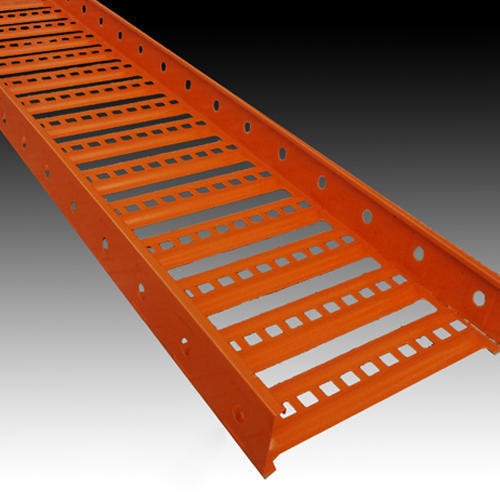 | Powder Coated Ladder Type Cable Trays 99 We are known for designing Powder Coated Ladder Type Cable Trays that are widely installed in industries, malls, railway stations, airports, office... View product → |
Frequently asked questions
Which dimensions should contractors include before requesting ladder cable tray prices?
List nominal width, usable cable width, overall width, side-rail height, rung spacing, tray length, material thickness and fitting dimensions as separate fields.
How do you calculate usable ladder tray width?
Add cable outside diameters, preserve required separation, include spare capacity, and check that the largest cable bend radius fits at elbows and terminations.
How should load ratings and support spans be matched?
Specify the cable load per metre, support spacing, concentrated loads and support type, then require the supplier to state the tested or calculated load rating for that arrangement.
Which finish suits ladder cable trays exposed to Noida conditions?
Choose the finish after assessing indoor, outdoor, chemical and drainage exposure; specify coating or galvanising details and require bonding across joints for electrical continuity.
What should a purchase order say so ladder cable trays can be inspected?
State dimensions, tolerances, material, finish, load criteria, accessories, continuity provisions, packing documents, inspection points and rejection conditions.
Related products
 | MS Painted Ladder Type Cable Trays ₹100 Our company is engaged in offering robust built Ladder Type Cable Trays that are made from the finest mild steel. View product → |
 | MS Painted Ladder Type Cable Trays ₹115 We are offering MS Painted Ladder Type Cable Trays that are chiefly used for distribution of power and communication cables. View product → |
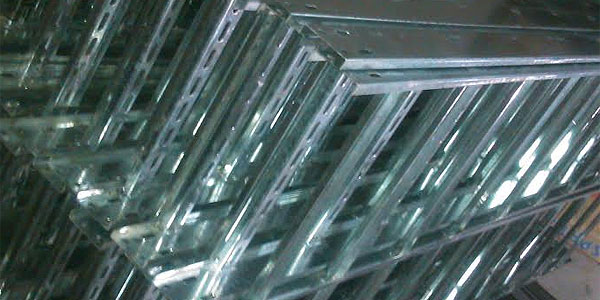 | Hot Dip Galvanized Ladder Type Cable Trays 113 Our company manufactures the finest range of Hot Dip Galvanized Ladder Type Cable Trays that is suited for heavy weight cables. View product → |
 | Cable Trays & Accessories Finish : Hot Dip Galvanized, Electro Plating, Natural MOC : MS, GI, SS304, SS316 View product → |
Keywords