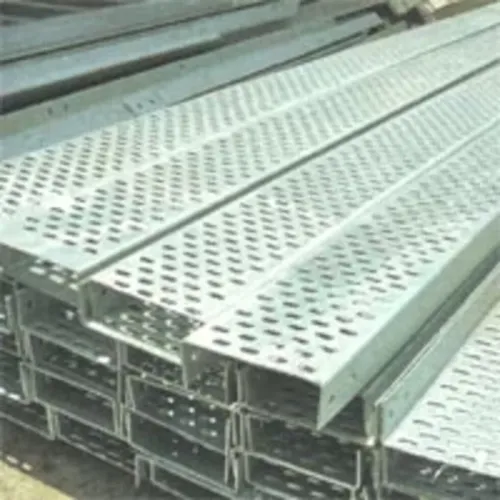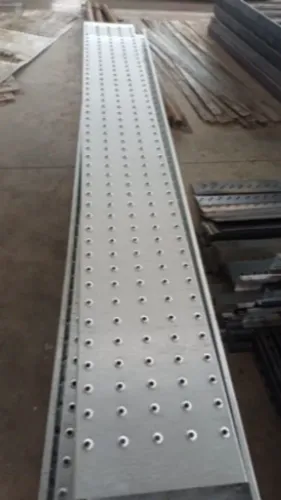
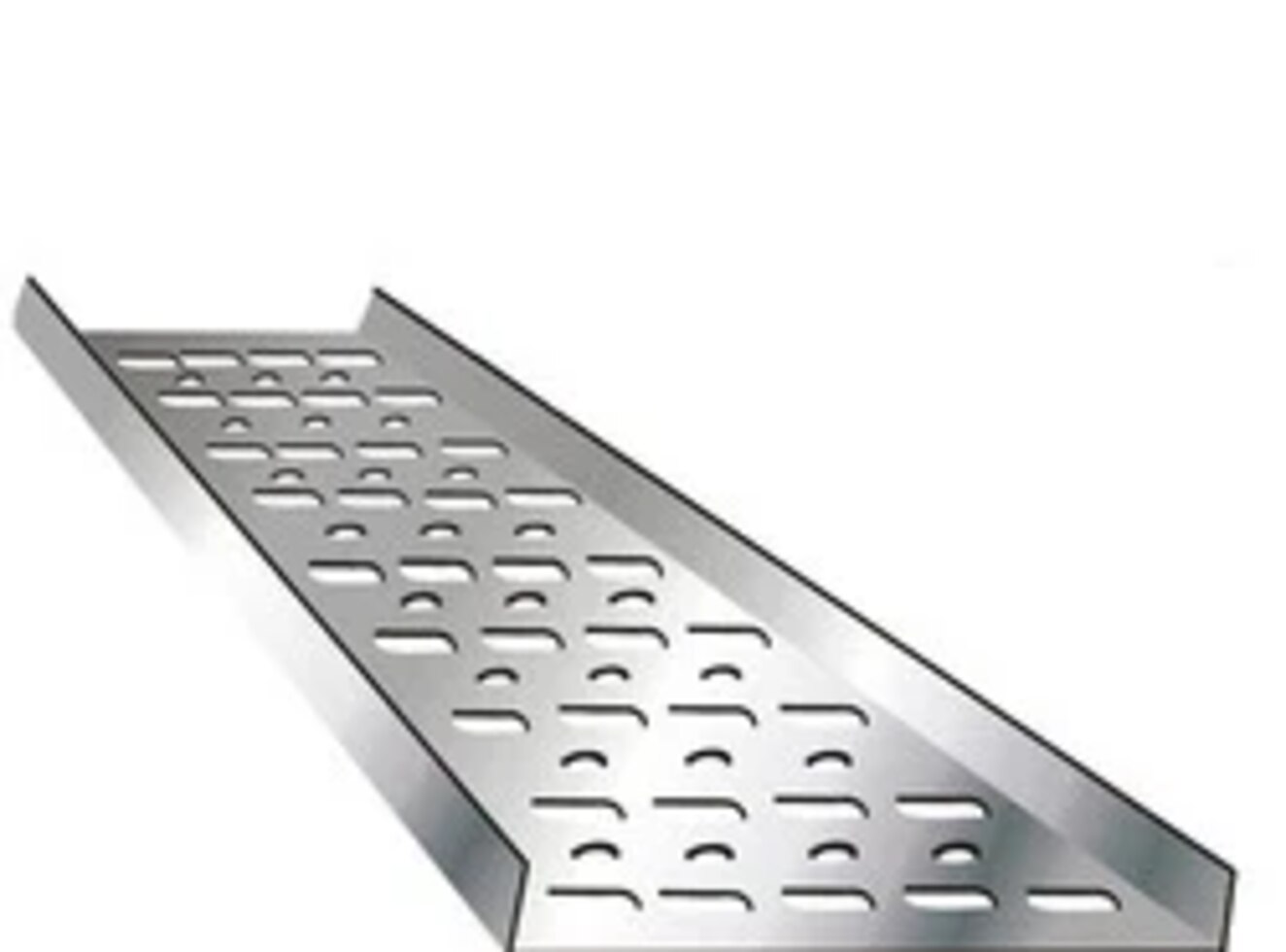
Start with the cables, not the tray catalogue: their diameters, weights, bending radii, heat limits and future additions determine the system you need. By the end, you will be able to calculate a defensible tray size and load, choose the right containment type and coating, and compare suppliers on installed performance rather than sheet thickness or price per metre.
Key takeaways
- Add cable outside diameters, then apply the project’s fill rule.
- State spare capacity separately from the working cable width.
- Verify tray load, support span, deflection and joint details.
- Reject trays that lack coating, test and dimensional documentation.
How do you turn the cable schedule into a tray size?
Build the tray width from the actual cable schedule, not a catalogue cable count. For each route, add the outside diameters of the cables occupying that tray, then apply the project’s fill rule. State spare capacity separately: for example, add 20% width or reserve capacity for named future cables.
Ten cables with different diameters can require far more width than ten identical small cables, so a 300 mm tray is not automatically suitable.
- Check the largest cable diameter against the tray’s side-wall height.
- Confirm every cable retains its minimum bending radius at entries, exits, risers and bends.
- Calculate cable mass by multiplying each manufacturer’s kg/m figure by the quantity on that route.
- Add the planned future-cable allowance to that mass.
- Convert the result to kN/m by multiplying kg/m by 0.00981.
- Add the tray’s own weight and any permitted installation or maintenance load stated by the project.
- Compare the resulting design load with the manufacturer’s allowable working load for the intended system.
- Check cable ampacity after grouping against the cable data and governing installation standard.
Perforations improve airflow and drainage, but they do not remove grouping derating. A physically wide tray can still fail the fill, heat-dissipation or ampacity check. This route calculation, including spare capacity, side-wall height, bending radius and dead load, is the starting point for defensible perforated cable tray selection.
How should tray load, span and support spacing be checked?
Check the design load against the manufacturer’s allowable working load at the exact support span you will build. A load table tested at 1.5 m spacing does not prove capacity at 2.4 m spacing. Include cable weight, tray self-weight, future capacity and any specified installation or maintenance load before making the comparison.
Ask for load-versus-span data and identify whether performance testing follows IEC 61537 or NEMA VE 1. Distinguish these values:
| Value | Meaning | Design use |
|---|---|---|
| Allowable working load | Service load permitted without excessive deflection | Compare with the calculated design load |
| Ultimate failure load | Load at which structural failure occurs | Not a design target |
| Point-load capacity | Resistance to a concentrated load between supports | Check for a person, tool or cable bundle |
Point loading can create a more severe local effect than evenly distributed cables. Request the manufacturer’s deflection limits, support arrangement, splice-location rules and allowable fitting loads; nominal sheet thickness alone cannot establish capacity.
Coordinate support locations with building steel, pipework, access routes and maintenance clearances. A thinner perforated cable tray with shorter permitted spans can require more brackets, anchors, couplers and labour, making its installed cost higher than a heavier tray with longer spans. Finalize quantities only after checking the complete support arrangement.
When is a perforated tray the wrong containment choice?
Choose a perforated cable tray when ventilation, drainage and frequent cable drops matter. Compare the alternatives before ordering; open holes do not provide sealed containment or electrical segregation.
| Option | Strength | Best fit |
|---|---|---|
| Ladder tray | Open support, low material weight and longer spans | Heavy power cables where continuous bottom support is unnecessary |
| Solid-bottom tray | Retains small cables, improves local shielding and limits falling debris | Small control or communication cables; add a cover or another containment solution for dust, liquid or washdown |
| Wire mesh tray | Light, flexible and quick to route | Small-diameter cables and frequent route changes; openings can lose cables or snag accessories |
| Conduit | Strong mechanical protection, ingress control and segregation | Exposed, wet or hazardous routes; installation takes longer and later additions are restricted |
Reject a perforated cable tray when:
- Control or fibre cables can fall through the openings.
- The area requires sealed dust, liquid or washdown containment.
- The selected coating cannot withstand the chemicals present.
- The route exceeds the manufacturer’s published support span.
- The installation requires EMC shielding.
Use separate trays, metallic dividers or defined spacing for power, control, instrumentation, communication and intrinsically safe circuits. Perforations are not electrical segregation. Check cable grouping, heat dissipation, minimum bending radius and the governing installation rules; ventilation alone does not eliminate ampacity derating.
How do holes, coatings and fittings change the specification?
Specify hole size and pitch as functional dimensions, not decoration. Large openings improve access, ventilation and drainage, but reduce small-cable retention and tie placement. Small, closely spaced holes provide more tie positions; they also reduce usable open area and can complicate tool access.
1. Define the complete geometry as one system: tray width, side-wall height and straight length, plus bend radius, reducer, tee, cross, riser, cover, separator, hold-down, splice plate, coupler and fastener requirements. Check every standard fitting against each cable’s minimum bending radius. Keep splice connections supported under movement and load.
2. Describe exposure, not merely “indoor” or “outdoor” in Greater Noida. Separate monsoon wetting, condensation, standing water, cement dust, industrial pollutants and washdown conditions; each can change the coating decision.
For a pre galvanized perforated cable tray, request the zinc coating designation or minimum zinc mass, base-steel grade, nominal thickness, dimensional tolerances and cut-edge repair method.
3. Do not treat pre-galvanized steel as steel hot-dip galvanized after fabrication. If zinc cannot meet the required service life, evaluate a duplex system, stainless steel or another specified material instead of simply increasing thickness. For hot-dip galvanizing, name ISO 1461, coating acceptance criteria and the repair procedure in the purchase specification.
What should you demand from a perforated cable tray supplier before purchase?
Issue a purchase specification naming tray width, side height, material grade, thickness, hole pattern, finish, load class, support span, deflection limit and complete fitting schedule. Require a dimensional drawing, declared load/span table, material and coating certificates, a sample coupler and a traceable inspection plan.
State whether the tray is a protective conductor or mechanical support only. Define bonding jumpers across joints and expansion gaps, then specify the continuity test required by the project’s earthing design.
Use this supplier review before approving delivery:
- Inspect actual thickness, width, height, hole pitch, flatness, burrs, coating damage and fit-up. A nominal gauge alone does not establish load performance.
- Confirm that straight sections, bends, tees, reducers, covers, splice plates and fasteners belong to one compatible system.
- Request tested load-versus-span data under IEC 61537 or NEMA VE 1, using the intended support spacing.
| Check | Demand | Why it matters |
|---|---|---|
| Documents | Certificates, drawings and inspection records | Creates traceability |
| Components | Matching fittings and couplers | Prevents unsupported cables and discontinuous bonding |
| Commercial offer | Supports, anchors, bonding, fittings and labour included | Reveals installed cost |
When comparing how to select a perforated cable tray in Greater Noida, judge exposure, span data and local installation support, not only the quoted rate. A perforated cable tray supplier such as S.V. Metals & Extrusions Pvt. Ltd. should be assessed against this evidence and your calculated route geometry.
Related products
 | GI Tray ₹100 We offer the most extensive range of perforated type cable trays, which are used for the installation of cables, smaller & controlled cables. View product → |
 | Powder Coated Perforated Type Cable Trays ₹101 We are offering Powder Coated Perforated Type Cable Trays that are used in industries, metro stations, office buildings, schools etc. View product → |
Frequently asked questions
How do you turn the cable schedule into a tray size?
List each cable’s outside diameter for the route, add those diameters, apply the project’s fill rule, and state spare capacity separately. For example, add 20% width or reserve space for named future cables.
How should tray load, span and support spacing be checked?
Calculate the cable load per metre, add the tray and fitting weight, then compare the total with the manufacturer’s load table for the proposed support span. Check the allowable deflection, support spacing, joint position and fixing method.
When is a perforated tray the wrong containment choice?
Choose another system when cables need a covered route, stronger mechanical protection, segregation that the tray layout cannot provide, or installation in an area where falling objects, dust or water can enter through the openings.
How do holes, coatings and fittings change the specification?
Compare hole pattern and opening size with cable cleats, glands and fixing hardware. Specify the coating, such as pre-galvanized steel or hot-dip galvanized steel, against the site’s corrosion exposure, and include bends, tees, reducers, covers and joint plates.
What should you demand from a perforated cable tray supplier before purchase?
Request dimensional drawings, steel thickness, coating details, load-versus-span data, deflection limits, fitting drawings, material certificates, test records and a clear packing list. Confirm that the quoted tray matches the cable schedule and installation environment.
Related products
 | Pre Galvanized Perforated Type Cable Trays ₹99 Pre Galvanized Perforated Type Cable Trays are widely used for power circulation in residential buildings, commercial complexes, institutes,... View product → |
 | MS Painted Perforated Type Cable Trays ₹108 Our company is engaged in offering supreme quality MS Painted Perforated Type Cable Trays that are widely used for providing circulation of cables... View product → |
 | Hot Dip Galvanized Perforated Type Cable Trays ₹98 We are widely known for designing Hot Dip Galvanized Perforated Type Cable Trays that are highly durable and the holes provide necessary ventilation. View product → |
 | Cable Trays & Accessories Bends for Perforated Cable Trays Finish : Painted, Powder Coated, Hot Dip Galvanized, Natural MOC : MS, GI, Aluminium View product → |