The right choice depends on cable type, heat, access, environment and how often the route will change. By the end, you will be able to compare an enclosed raceway with open tray, conduit and underfloor systems, size the route correctly, and specify the evidence a supplier must provide before purchase.
Key takeaways
- Choose enclosed raceways for protection from dust, impact and tampering.
- Confirm cable separation requirements before selecting a raceway layout.
- Size for fill, heat, bend space and future circuits—not current cables alone.
- Request material, finish, testing and installation documents before ordering.
When an Enclosed Raceway Earns Its Place
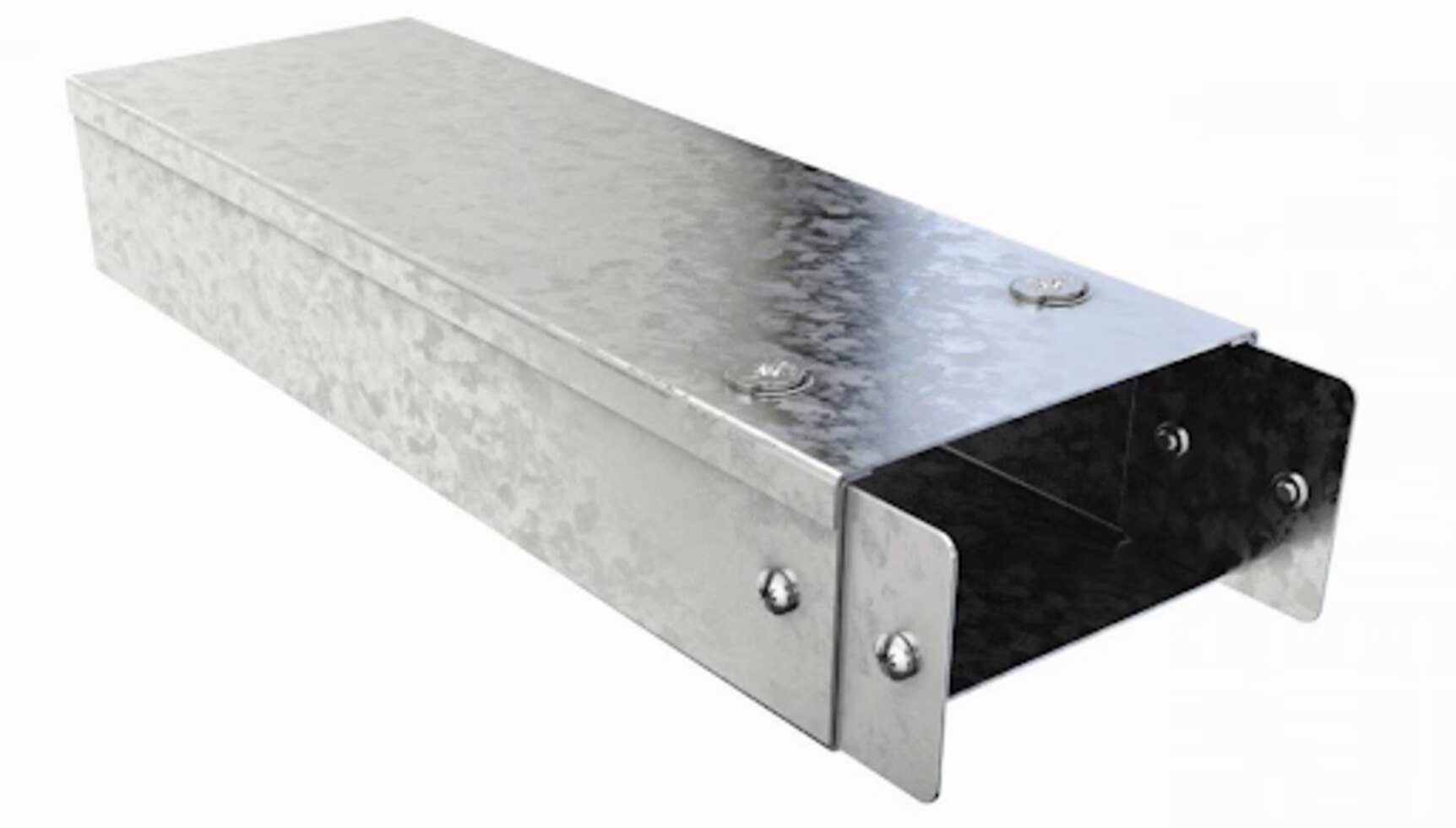
Choose an enclosed raceway when the cables need continuous physical protection, a tidy concealed route, or control against dust, impact and tampering. “Raceway cable tray” is often a sales term, not a code classification: confirm whether the specification calls for an enclosed raceway or an open cable-tray system.
That distinction changes fill, heat dissipation, access and inspection.
| Option | Prefer it when | Main compromise |
|---|---|---|
| Enclosed raceway | Cables run through public areas, dirty plant rooms or congested ceiling voids and need a protected, orderly route | Less ventilation and slower cable additions |
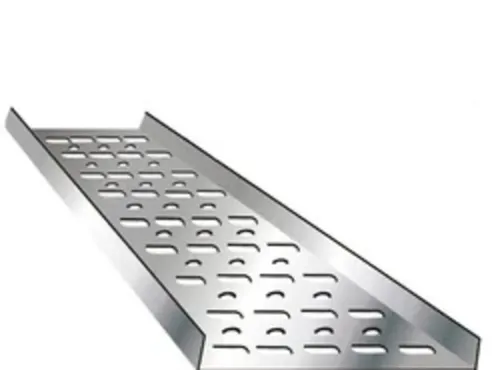
| Perforated tray | You need continuous support, visible inspection and easier access for smaller cables | Open exposure and debris collection |
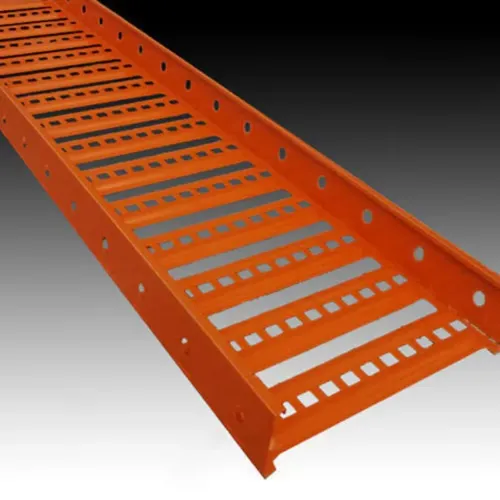
| Ladder tray | Heavy power cables need ventilation, long straight runs and secure cleating | Limited support for small or vulnerable cables |
| Conduit | A circuit needs strong mechanical protection, a sealed route or a separately protected path | Pulling and future replacement become difficult |
| Surface trunking | You need an accessible route along a finished wall with frequent outlet changes | More visible and less robust than a raceway |
| Underfloor system | An accessible raised floor serves offices with frequent workstation moves | Floor access, water exposure and coordination become ongoing concerns |
The raceway cable tray benefits are greatest where protection and visual control outweigh easy inspection. Do not choose an enclosure merely to hide cables: bundled or closely packed conductors retain heat, and allowable ampacity still depends on cable type, loaded conductors and ambient temperature. Use an open tray when ventilation and rapid additions matter more.
Match the Raceway to the Cable and the Separation Plan
Do not put every commercial-building cable in one channel just because the raceway has spare space. A raceway cable tray for buildings must match cable voltage, insulation rating, electromagnetic-interference risk and the separation rules in the adopted electrical, communications and fire-alarm standards.
| Cable category | Can share a route? | Separation decision |
|---|---|---|
| Power circuits | Yes, with compatible power cables | Keep higher-load or noisy circuits apart from communications; use a metal divider or separate raceway when required by the equipment or code. |
| Control circuits | Sometimes | Share with power only when the cable insulation, voltage class and governing rules permit it; otherwise use a separate compartment. |
| Data and telecom | Rarely with power | Use a separate raceway or a dedicated compartment, especially for copper data cables near variable-frequency drives, motors or large feeders. |
| Fire-alarm circuits | Treat as dedicated | Keep them separate from power and unrelated control wiring; follow NFPA 72 and the locally adopted fire code for pathway and survivability requirements. |
Power and communications can cross at right angles when a shared route is unavoidable; running them parallel for long distances increases coupling and troubleshooting risk. Do not rely on spacing alone when a barrier or separate pathway is specified.
Specify the product accurately. A cable tray is an open support system, while an enclosed raceway is a channel or conduit; “raceway cable tray” is commercial shorthand, not a code classification. Put the required compartments, barriers and cable groups on the drawings before ordering.
Size the Route for Fill, Heat, Bends and Future Circuits
Verify the product first: an enclosed raceway is sized by internal fill and pulling limits, while an open cable tray is sized by usable width, cable arrangement and support loading. Require drawings showing cable outside diameters, loaded conductors, cable weights, spare capacity and planned future circuits—not just a nominal tray width.
Check the route against these four constraints:
- Fill: keep the calculated cable area within the permitted raceway fill, including spare capacity reserved for additions.
- Heat: confirm ampacity using conductor count, spacing, bundling, ambient temperature and cable installation method. Open tray improves ventilation but does not remove derating.
- Bends: maintain the largest cable’s minimum bend radius and provide fittings that do not force sharp turns or excessive pulling tension.
- Access: place pull points, removable covers or accessible tray sections where cable length, bends and maintenance make installation impractical in one run.
Design supports for the combined cable, tray, cover and fitting loads at the specified span. Attach supports to structural steel or approved anchors, not ceiling panels. Single-core AC cables also need cleats selected for the prospective short-circuit current, cable arrangement and tested spacing; tray strength alone is not fault protection.
Make every joint electrically continuous if the tray forms part of the bonding or equipment-grounding path. Specify listed bonding hardware or jumpers across painted joints, expansion joints and discontinuities, then test continuity after installation. A powder-coated splice plate that has no verified metal-to-metal path is not a reliable fault-current path.
Check Environment, Fire Safety and the Cost of Access
A “raceway cable tray” quote must identify the actual system: an enclosed raceway with covers, or an open cable tray. Enclosure improves mechanical protection and limits dust exposure, but it reduces visual inspection, traps more heat and makes new cable pulls slower. Price access panels, removable covers and pull points before choosing it.
| Finish | Suitable environment | Value risk |
|---|---|---|
| Pre-galvanized steel | Dry indoor plant rooms and corridors | Field cuts, drilled holes and damaged edges need corrosion treatment |
| Hot-dip galvanized steel after fabrication | Damp areas and exposed service zones | Specify the coating standard, such as ISO 1461, and allow for drainage, venting and dimensional changes |
| Painted steel | Controlled indoor spaces where appearance matters | Scratches and unsealed fabrication points can start corrosion |
| Aluminum or stainless steel | Chlorides, chemicals or persistent moisture | Higher material cost can be justified when replacement access is difficult |
Use this procurement checklist:
- Require the enclosure, cover type, internal barriers and ingress protection level on the drawings; do not accept “raceway cable tray” as the only description.
- Specify the building’s exposure, coating standard, minimum coating requirement and field-repair method.
- At every rated wall or floor, require a tested and listed firestop system compatible with the cables and opening. Ordinary sealant is not an equivalent firestop.
- Check access-panel spacing, cleaning routes, inspection time and spare capacity. An enclosed route that cannot be opened without dismantling finishes becomes expensive to maintain.
- Recheck ampacity for enclosed heat, loaded conductors, bundling and ambient temperature.
What to Demand from a Raceway Supplier Before Ordering
Do not approve a quote that says only “raceway cable tray.” Require the supplier to name the system as an enclosed raceway, cable tray, or trunking, then show the exact dimensions, cover, fittings and cable-separation arrangement. The label affects fill, heat dissipation, inspection and fire-stopping details.
Ask any raceway cable tray manufacturer for commercial buildings in Greater Noida for one coordinated submittal containing:
- Plan and elevation drawings showing bends, access points, supports and penetrations.
- Material grade, coating or finish certificates, plus the product series and fitting schedule.
- Load-versus-span data for the proposed support spacing, not a generic catalogue rating.
- Splice, bonding and electrical-continuity details, including earth-bonding jumpers where required.
- Bend-radius compatibility, cover retention and inspection records for the exact assembly.
- Cable-cleat spacing and fault-withstand evidence for single-core AC cables.
A raceway tray supplier in Greater Noida can reduce delivery and site-coordination time, but S.V. Metals & Extrusions Pvt. Ltd. should be assessed by the same evidence as every competing bidder.
| Evidence | Worth specifying | Reject or query |
|---|---|---|
| System identity | Named raceway or tray series with drawings | Marketing term only |
| Engineering | Tested load/span and cleat data | “Heavy duty” without figures |
| Traceability | Certificates for the quoted finish and fittings | Certificates for another product |
| Site readiness | Delivery schedule and installation details | Tray supplied without bends, covers or supports |
Related product
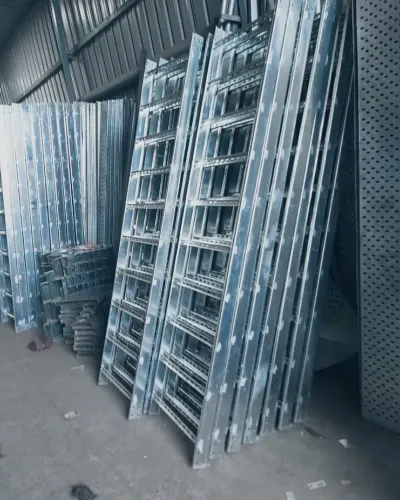
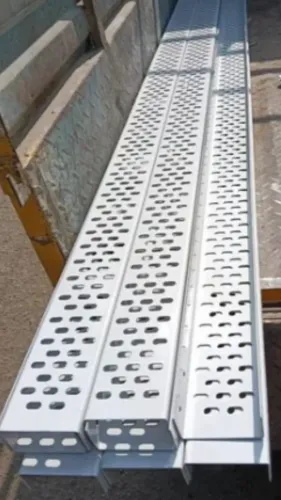
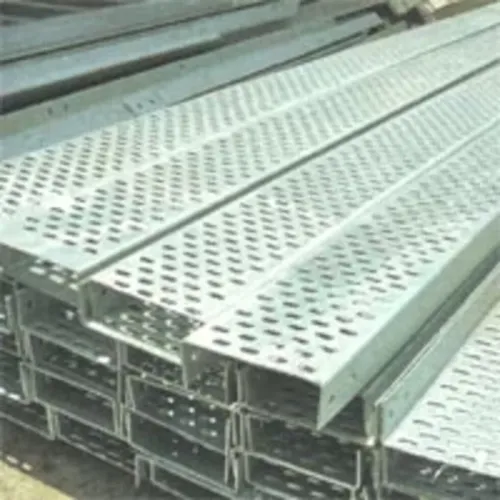
 | Pre- Galvanized Raceways Raceways ₹121 Our company develops supreme quality Raceways that are widely installed in distribution of power cables throughout building premises. |
Frequently asked questions
When is an enclosed raceway worth choosing for a commercial building?
Choose an enclosed raceway when cables need continuous physical protection, a concealed route, or control against dust, impact and tampering. Confirm whether the specification requires an enclosed raceway rather than an open cable tray.
How should you match a raceway to the cables and separation plan?
Identify each cable type, voltage level and circuit function, then confirm required separation before choosing the raceway. Keep power, control, data and fire-alarm circuits separated when the design or applicable code requires it.
How do you size a raceway cable tray route?
Allow for cable fill, heat dissipation, bend radius, access at bends and future circuits. Do not size the route only around the cables being installed on the first day.
What environmental and fire-safety factors affect raceway selection?
Check exposure to moisture, dust, chemicals, impact and corrosion, then select a suitable material and finish. Review fire-stopping at penetrations, access requirements and the building’s fire strategy before ordering.
What should you ask a raceway supplier before placing an order?
Request material and finish details, dimensions, load information, test or inspection documents, fittings, installation guidance and delivery scope. Ask the supplier to confirm compatibility with your cable sizes, separation plan and site environment.
Keywords