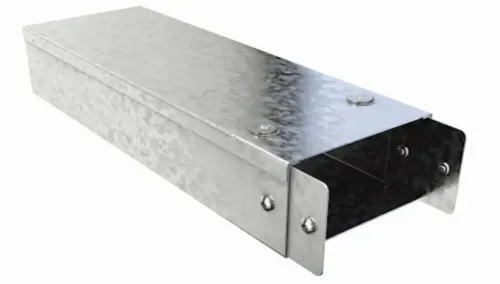


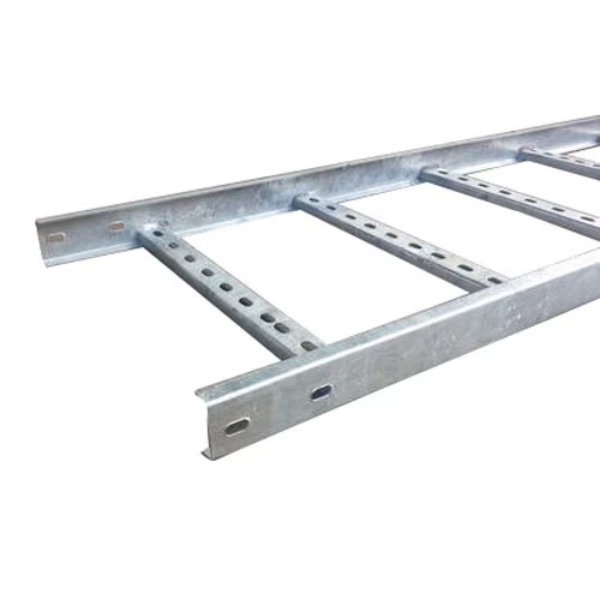
Large industrial electrical systems require strong and accessible pathways for power cables. Ladder Cable Trays are designed around two longitudinal side rails connected by transverse rungs, creating an open structure suitable for demanding cable routing applications.
This configuration makes ladder-style systems particularly relevant when engineers need ventilation, cable support and convenient access along major power distribution routes.
The Open Structure Supports Air Movement
Heavy power cables can generate heat while carrying electrical loads.
An open tray configuration allows air to circulate around much of the cable surface instead of enclosing the cables within a solid pathway.
This is one reason ladder systems are frequently considered for heavy-duty power distribution.
S.V. Metals & Extrusions Pvt. Ltd. describes its ladder tray range as suitable for industrial power distribution, with an emphasis on ventilation and load-carrying capability.
Long Cable Routes Need Careful Engineering
Selecting Ladder Cable Trays involves more than deciding the tray width.
The engineer should consider:
- Cable weight
- Number and diameter of cables
- Tray material
- Material thickness
- Support spacing
- Route length
- Changes in elevation
- Environmental exposure
Support spacing is particularly important because it affects how loads are transferred from the tray to the supporting structure.
Project drawings and approved load requirements should guide the final selection.
Access Can Simplify Cable Installation
The open construction of ladder trays can make cables accessible during installation and subsequent maintenance.
This can be valuable in plants where cable routes may require inspection, modification or expansion.
Electrical teams can visually inspect sections of the cable route without opening a fully enclosed system.
However, the cables still need appropriate fixing and installation practices according to the engineering design.
Different Environments Require Different Finishes
An indoor industrial building and an exposed outdoor utility area present different operating conditions.
For this reason, engineers should evaluate the environment before choosing material and surface treatment.
The company lists ladder tray options with painted, powder-coated, hot-dip galvanised and natural finishes, along with MS, GI and aluminium material options.
For projects in Greater Noida and other industrial locations across Uttar Pradesh, environmental exposure should be considered alongside mechanical loading rather than treated as a secondary specification.
Accessories Should Follow the Designed Route
Industrial cable routes rarely remain completely straight.
They may need horizontal bends, vertical transitions, tees and other components to navigate structures and equipment.
Preparing these requirements from coordinated drawings helps reduce site fabrication and makes installation more predictable.
When Ladder Construction Makes Practical Sense
Ladder Cable Trays are worth considering when a project involves substantial power cable loads, longer cable runs, ventilation requirements and the need for accessible routing.
They should not be selected automatically for every cable circuit. Lighter communication or instrumentation routes may have different requirements.
For EPC companies and electrical contractors, matching the tray construction to the cable type and actual load is more effective than using one cable management system throughout an entire facility.
A properly engineered ladder tray route can provide a strong, accessible and scalable foundation for industrial power distribution.